
A beautiful backyard means little if you feel like you’re sharing it with the neighbours. You might have a stylish outdoor setting, a tidy garden and the perfect spot for a weekend barbie. But when someone can see straight into your space, relaxing becomes a little harder. That’s where slat screening can make a real difference.
For Perth homeowners, outdoor privacy matters just as much as good design. Whether you live in a compact townhouse or a spacious suburban home, the right privacy screen can turn an exposed patio, courtyard or entertaining area into a comfortable retreat. Better still, you don’t need to sacrifice airflow or natural light to enjoy that extra privacy.
Of course, not every screen delivers the same result. The material, slat spacing, height and overall design all influence how well it works. Working with slat screening specialists in Perth can help you create an outdoor setup that balances privacy, durability and modern style. Here’s what I recommend considering before making your choice.
1. Start by Understanding How Much Privacy You Need
Before choosing colours or designs, ask yourself one simple question: What exactly do I want to hide from view?
Some homeowners want to block direct views from neighbouring windows. Others want a little separation around their alfresco area without closing off the entire backyard.
Your privacy needs will influence the type of slat screening you choose.
For example:
- Full privacy: Choose a design with minimal gaps to reduce direct visibility.
- Partial privacy: Allow some space between the slats to balance privacy and openness.
- Decorative screening: Use wider gaps to define outdoor areas without creating a closed-in feeling.
I suggest checking your backyard from different positions throughout the day. Sit at your outdoor table, stand near the fence and consider what someone might see from neighbouring properties.
That quick check can save you from choosing a beautiful screen that doesn’t actually solve your privacy problem.
2. Choose the Right Slat Spacing for Privacy and Airflow
Slat spacing plays a major role in how your outdoor privacy screen performs.
Smaller gaps generally limit direct views, while wider gaps allow more light and air to move through. However, the viewing angle matters too. Even narrow gaps can reveal parts of your outdoor space when someone looks through them from the side.
Here’s a simple comparison:
| Slat Spacing | Privacy Level | Best Application |
| Very narrow gaps | Higher | Private courtyards and patios |
| Moderate gaps | Balanced | Backyard entertaining areas |
| Wider gaps | Lower | Decorative screens and open spaces |
| Angled slats | Depends on angle | Areas requiring directional privacy |
These are general design comparisons, not fixed privacy ratings.
For Perth’s warm summers, I usually favour a design that allows some airflow while blocking unwanted sightlines. After all, nobody wants their alfresco area to feel like a closed cupboard in January.
Consider how the sun, wind and neighbouring windows interact with your proposed screen. A thoughtful layout can deliver privacy without making the space feel cramped.
3. Check Perth Council Requirements Before Installation
Before you commit to a particular height or design, check your local council’s requirements.
Different Perth councils apply planning rules that may affect your outdoor privacy screen, particularly when you install it near a boundary, along the front of your property or above an existing fence.
The Western Australian Government explains residential planning and visual privacy requirements through its Residential Design Codes (R-Codes).
When planning your project, check:
- Whether your screen requires planning or building approval.
- Whether local rules restrict its height or location.
- Whether your design affects neighbouring properties.
- Whether a front fence must meet visual permeability requirements.
Don’t assume that a standard fence height automatically suits every screening project.
Your council can confirm the requirements for your property. If you live in a strata complex, check any applicable strata rules as well.
4. Select a Material That Can Handle Perth’s Climate
Perth brings plenty of sunshine, hot summers, winter rain and coastal conditions. Your screening material needs to handle all of them.
Although you have several options, aluminium, timber and composite materials remain popular for outdoor privacy projects.
Aluminium Slat Screening
Aluminium offers a smart choice for homeowners who want modern style without constant maintenance.
Quality powder-coated aluminium resists corrosion, doesn’t rot and generally needs little more than regular cleaning.
It also comes in different colours and wood-look finishes, giving you plenty of flexibility.
Timber Slat Screening
Timber creates a warm, natural appearance that works beautifully with gardens and traditional outdoor spaces.
However, Perth’s strong sun and changing weather can affect its appearance over time. You’ll need to consider regular cleaning, coating and ongoing maintenance.
Composite Screening
Composite products can offer a timber-inspired appearance with different maintenance requirements.
However, performance varies between products. Always check manufacturer guidance on UV resistance, heat movement and installation.
My preference? For a modern Perth home where low maintenance matters, aluminium slat screening often makes the most practical sense.
If you live near the coast, ask about suitable powder-coat finishes, fixings and maintenance requirements for salt exposure.
5. Horizontal or Vertical Slats: Which Design Works Better?
The direction of your slats can completely change the appearance of your outdoor space.
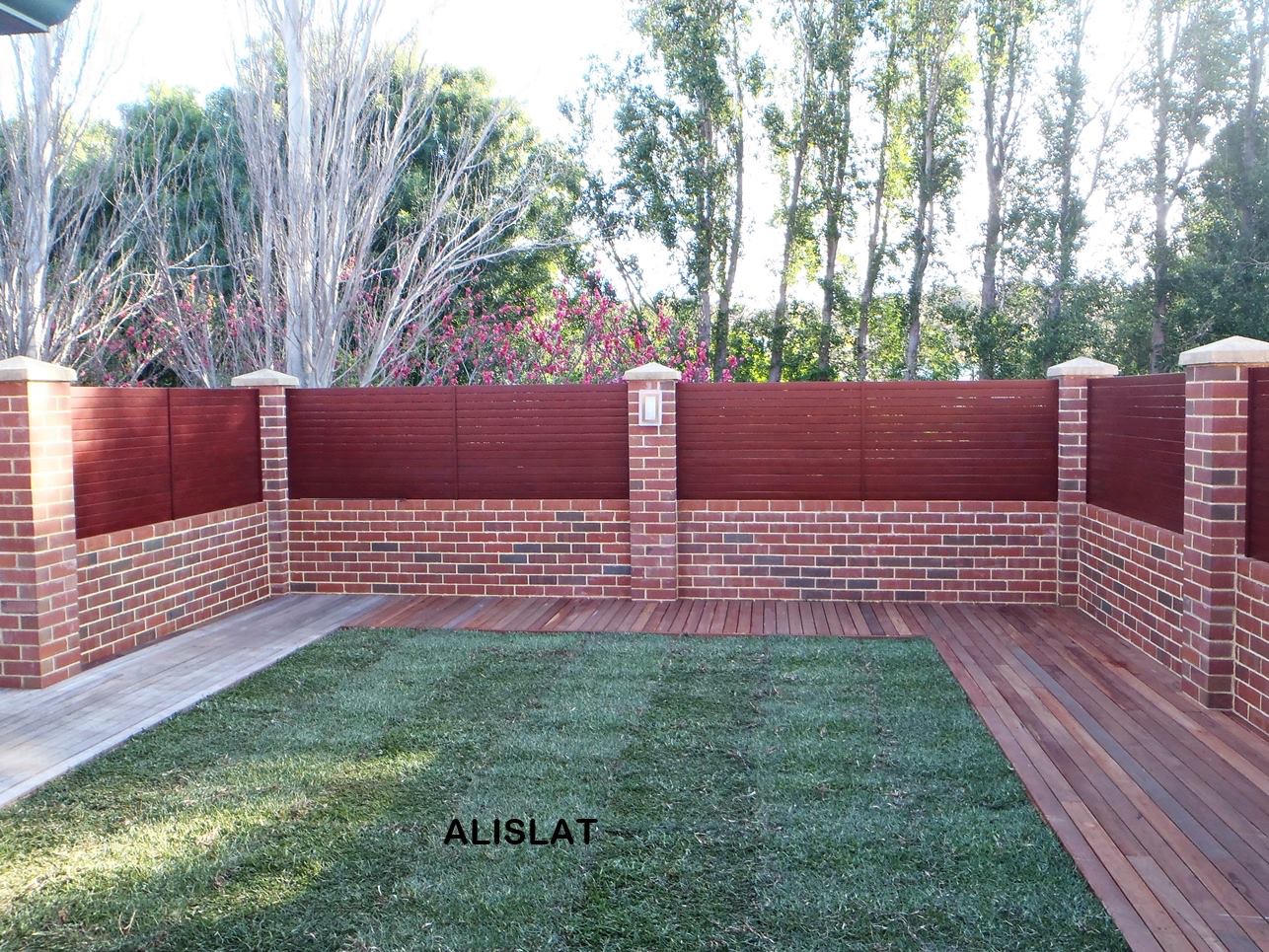
Horizontal slat screening creates long, clean lines that can make compact courtyards appear wider. It works especially well with contemporary homes, patios and modern fencing.
Vertical slat screening, meanwhile, draws your eyes upwards. It can make a small outdoor area feel taller and give entrances or garden boundaries a more architectural appearance.
Neither orientation automatically provides better privacy.
Instead, consider how the slat gaps align with nearby viewing points.
For example, vertical slats may restrict views from certain side angles, while horizontal designs can suit particular elevated or front-facing sightlines. Slat width, depth and spacing all affect the result.
If you can, review a full-size sample from the positions where neighbours might look into your backyard.
That tells you far more than a product photo.
6. Match Your Slat Screening to Your Outdoor Space
A privacy screen should complement the way you use your backyard rather than simply cover an exposed area.
Here are a few practical approaches.
Patios and Alfresco Areas
Choose screening that provides privacy around your seating and dining spaces while allowing comfortable airflow.
Small Courtyards
Consider slim aluminium slats, neutral colours and simple lines. These features can help a compact courtyard feel organised rather than overcrowded.
Pool Surrounds
Slatted panels can improve privacy around swimming areas. However, if your screen forms part of a pool barrier, you’ll also need to meet the applicable pool safety requirements. A decorative privacy screen alone doesn’t guarantee compliance.
Side Boundaries
Privacy panels can help screen neighbouring windows, walkways and exposed side areas.
Think about the screen’s position carefully. Sometimes a smaller, well-placed panel solves the problem better than covering an entire boundary.
7. Pick Colours That Complement Your Home
Colour might seem like a finishing detail, but it can influence the entire look of your backyard.
Dark charcoal and black finishes create a strong contemporary appearance. They work beautifully with light render, concrete and minimalist landscaping.
White and lighter neutral shades create a softer, brighter effect, especially around compact patios.
Wood-look aluminium brings warmth without the same upkeep as natural timber.
I recommend comparing colour samples outdoors rather than relying only on online images. Perth’s bright sunlight can make finishes appear quite different from how they look indoors.
Also, consider your existing fencing, window frames and outdoor furniture.
A coordinated finish often creates a cleaner look than introducing another competing colour.
8. Think About Installation, Strength and Long-Term Maintenance
Even the best-looking privacy screen can disappoint if you overlook structural support.
Before installation, check the proposed mounting surface, available fixing points and exposure to wind.
Freestanding screens need suitable posts and footings. Screens attached to existing fences or walls require adequate support, especially when they increase the overall height or wind load.
Ask your installer about:
- Suitable posts, fixings and structural support.
- Screen dimensions and custom fabrication.
- Powder-coat quality and available warranties.
- Drainage, cleaning and maintenance access.
Professional installation can also help you achieve consistent gaps and neat alignment.
For everyday maintenance, clean aluminium surfaces according to the manufacturer’s recommendations. Coastal properties may require more frequent washing to remove salt deposits.
9. Consider the Overall Cost, Not Just the Cheapest Quote
The cheapest screening option doesn’t always deliver the best long-term value.
Several factors influence the cost of slat screening in Perth, including the material, overall dimensions, slat profile, finish and installation complexity.
Custom designs, additional posts and difficult site access can also increase the final price.
Before accepting a quote, check whether it covers materials, fabrication, installation, fixings and any necessary site preparation.
I would also compare maintenance requirements and warranties.
A slightly higher upfront investment in a suitable material and quality installation may save you money and frustration later.
Conclusion: Create an Outdoor Space That Feels Like Yours
The right slat screening can transform how you use your backyard. It gives you greater privacy, adds a modern finish and helps create a comfortable space for everyday living.
Start with your privacy needs, then consider spacing, materials, height, design and local council requirements. Most importantly, choose a solution that suits your home rather than simply following a trend.
Ready to improve your outdoor privacy? Contact ALISLAT Fencing and Gates to discuss custom aluminium slat solutions for your Perth property and request a quote that suits your space.
Frequently Asked Questions (FAQs)
1. What type of slat screening offers the most privacy?
Slat screening with closely spaced or appropriately angled slats generally offers greater privacy. However, screen height, viewing angles and the location of neighbouring windows also matter. A custom design can help you control unwanted views while maintaining airflow.
2. Is aluminium slat screening suitable for Perth’s coastal areas?
Yes. Quality aluminium systems with suitable protective finishes can work well in coastal environments. Choose appropriate fixings and follow the manufacturer’s cleaning recommendations to manage salt exposure and maintain the finish.
3. How high should outdoor privacy screening be?
The ideal height depends on your property’s layout, neighbouring sightlines and applicable council rules. A screen around 1.8 metres may suit some ground-level privacy needs, but elevated views can require a different approach. Check local requirements before finalising the height.
4. Can I install slat screening on top of an existing fence?
You may be able to add screening to an existing fence if the structure can safely support the additional height and wind load. Check the fence’s condition, mounting requirements, boundary arrangements and council rules before proceeding.