

A good fence does more than mark where your property ends. It gives you privacy, improves security and adds the finishing touch that makes your outdoor space look complete. But choose the wrong fence, and you could end up spending your weekends fixing loose panels, repainting timber or wondering why you didn’t explore better options.
In Wangara, fencing needs vary from one property to another. The area’s busy industrial and commercial properties often prioritise security, access and durability. Meanwhile, homeowners in nearby Perth suburbs look for modern designs that offer privacy without making their front yards feel closed in. Add Western Australia’s hot summers, strong winds and occasional winter storms, and material choice becomes even more important.
If you’re researching Fencing Wangara options, I’d recommend looking beyond the initial price. The right fence should suit your property’s layout, handle local weather conditions and complement its overall design. In this guide, I’ll walk you through popular fencing types, installation costs, council requirements and practical tips to help you make a confident decision.
1. What Are the Best Types of Fencing for Wangara Properties?
You have plenty of options, but not every material suits every property. Some offer excellent privacy. Others focus on security, affordability or visual appeal.
Let’s explore the most practical choices.
Aluminium Slat Fencing: Modern, Stylish and Low Maintenance
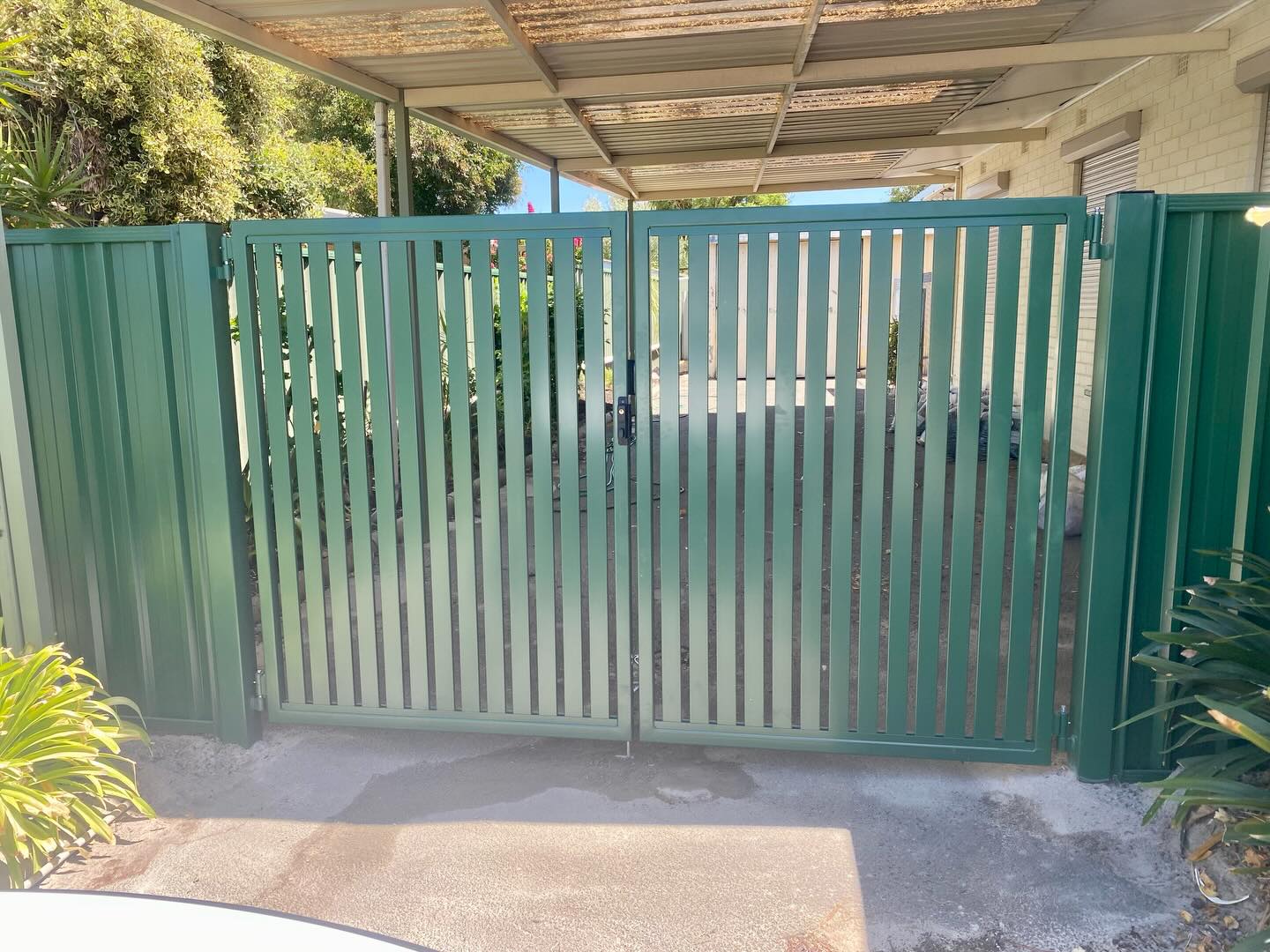
Aluminium slat fencing has become a popular choice for contemporary properties across Perth, and it’s easy to understand why.
Its neat horizontal or vertical lines give your property a clean, modern appearance. You can also adjust the spacing between slats to balance privacy, ventilation and natural light.
Unlike timber, aluminium doesn’t rot or attract termites. A quality powder-coated finish also helps protect it against corrosion and everyday weather exposure.
Why consider aluminium slat fencing?
- Modern designs with horizontal or vertical slats
- Various colours, including black, charcoal and timber-look finishes
- Low maintenance compared with natural timber
- Custom heights, widths and spacing options
- Matching pedestrian and driveway gates
I particularly like aluminium slats for front boundaries, courtyard screens and entryways. They create a polished look without turning the property into a concrete fortress.
However, slat spacing matters. Wider gaps encourage airflow and visibility, while narrower gaps improve privacy. Neither automatically makes a fence suitable for pool-barrier use.
Steel Panel Fencing: Practical Privacy on a Budget
Steel panel fences offer an economical option for side and rear boundaries.
Their solid panels block direct views, and their protective coatings help them cope with Perth’s outdoor conditions.
They’re particularly useful when you want a straightforward boundary fence rather than an architectural feature.
However, steel panels can show dents, and damaged coatings may allow corrosion to develop. Choose suitable materials, coatings and fixings for your property’s exposure.
Timber Fencing: Natural Character With Extra Upkeep
Timber brings warmth and texture to outdoor spaces. It works particularly well with traditional gardens, established landscaping and homes that favour natural materials.
You can choose different paling styles, stains and heights to suit your design.
The downside? Timber needs attention.
Perth’s strong sunlight can dry out timber, while moisture can contribute to movement and deterioration. Regular staining, sealing and inspections help protect its appearance.
If you love timber’s appearance but dislike maintenance, aluminium slats with a timber-look finish offer a practical alternative.
Composite Fencing: A Contemporary Timber Alternative
Composite products typically combine wood fibres or other fillers with plastic-based materials.
They offer a timber-inspired appearance without the same regular staining requirements.
However, composite fencing varies considerably between manufacturers. Some products expand with temperature changes, while others need special support systems.
Before choosing composite, check its UV resistance, warranty, fixing method and suitability for Perth’s climate.
Chain-Link and Security Fencing: Functional Choices for Commercial Sites
Wangara has a strong industrial and commercial presence, so businesses often have different priorities from homeowners.
Warehouses, workshops and storage yards may need fences that help control access while allowing staff to see through the boundary.
Chain-link and other security fence systems can suit these applications.
However, businesses should consider vehicle movements, gate widths, pedestrian access and site security requirements before selecting a design.
2. How Much Does Fencing Cost in Wangara?
Let’s talk numbers.
Your fencing budget depends on material, length, height, design complexity and installation conditions.
For example, a short decorative aluminium fence at the front of a property may cost more per metre than a long, straightforward steel boundary fence.
Estimated Fencing Costs Per Metre
The following figures offer broad planning ranges for Perth-area projects in 2026.
| Fence Type | Indicative Installed Cost | Common Application |
| Aluminium slat | $180–$400 per metre | Front fences, privacy screens, decorative boundaries |
| Steel panel | $90–$180 per metre | Side and rear boundary fences |
| Timber paling | $100–$220 per metre | Residential boundaries and gardens |
| Chain-link | $50–$120 per metre | Commercial and industrial perimeters |
| Custom masonry and feature fencing | Project-specific quotation | Premium front boundaries and feature walls |
These figures provide indicative budgeting estimates in AUD, not fixed Wangara prices. They generally assume straightforward installations and exclude major site preparation, demolition, retaining work, unusual foundations and gates. Ask an installer for a detailed, current quotation.
For perspective, a straightforward 10-metre aluminium slat fence could have a base installation estimate of approximately $1,800–$4,000, before additional site costs.
Of course, your actual quote may sit outside that range.
What Factors Increase Fence Installation Costs?
Fence height and length
Taller fences need more materials and may require stronger posts and deeper footings. Longer fences generally cost more overall, although a simple long run can sometimes achieve a better per-metre price than several short sections.
Material quality and finish
Standard powder-coated colours usually cost less than custom finishes. Premium slat profiles, timber-look coatings and special hardware can increase your budget.
Sloping or uneven ground
A level site makes installation relatively straightforward. Slopes often require stepped panels, custom measurements or additional groundwork.
Ground conditions
Perth’s sandy and limestone-rich ground can affect post-hole excavation. Hard limestone, buried services and difficult access may increase labour costs.
Gates and automation
A matching pedestrian gate adds convenience, while sliding gates, double driveway gates and automatic systems require additional materials, hardware and installation work.
My advice? Don’t judge a quote by the cost per metre alone. Always check what the installer includes.
3. Council Rules, Fence Heights and Boundary Requirements in Wangara
Before you order materials or book an installer, check the rules that apply to your property.
Wangara falls within the City of Wanneroo, which applies local fencing requirements alongside Western Australian planning and building regulations.
Do You Need Council Approval for a New Fence?
That depends on your fence design, location, material and height.
According to the City of Wanneroo’s front fence approval guidance, a residential front fence may require development approval if it doesn’t comply with the Residential Design Codes.
The City also identifies building permit requirements for certain structures, including:
- Non-masonry fences that exceed 1.8 metres in height.
- Masonry fences that exceed 750 mm in height.
- Structures with retaining-wall elements that exceed the relevant height threshold.
Other local fencing laws, sightline requirements and property-specific planning controls may also apply.
Don’t assume that every fence under 1.8 metres automatically complies. Front setbacks, visibility near driveways and the property’s land-use classification can affect what you can build.
Commercial and industrial sites may have different requirements from residential properties.
I recommend checking your proposal with the City of Wanneroo before you commit to the final height, layout or design.
Who Pays for a Shared Boundary Fence?
Western Australia’s Dividing Fences Act 1961 outlines responsibilities between neighbouring property owners.
Generally, adjoining owners may need to contribute equally towards the cost of a legally sufficient dividing fence, subject to the Act’s rules and any relevant agreements.
However, that doesn’t mean your neighbour must pay half the cost of every premium design you choose.
For example, if you want a more expensive decorative fence than the applicable sufficient-fence standard, discuss the additional cost before installation.
The smartest approach is simple: talk to your neighbour, agree on the design and cost-sharing arrangement, and keep the agreement in writing.
You’ll avoid misunderstandings and potentially save yourself a rather uncomfortable conversation over the back fence.
4. How Does the Fence Installation Process Work?
A professional fencing installation involves more than digging holes and attaching panels.
Good planning helps prevent uneven sections, poorly aligned gates and structural problems later.
Here’s how I would approach the process.
Step 1: Inspect and Measure the Property
Start with an accurate assessment of the site.
Your installer should check the proposed fence length, property levels, access conditions and existing structures.
For boundary fences, confirm the legal boundary rather than assuming the old fence marks it correctly.
A licensed surveyor can help when boundary positions remain unclear.
Also check for underground electrical cables, water pipes and other services before excavation.
Step 2: Choose the Material and Design
Next, decide what you want your fence to achieve.
Do you need complete privacy? Better street appeal? A secure boundary for a workshop?
For a modern home, I would consider a powder-coated aluminium slat system with a matching gate.
For a long rear boundary where appearance matters less, a simpler panel design might offer better value.
Confirm the height, colour, slat spacing and gate configuration before finalising your quote.
Step 3: Confirm Approvals and Prepare the Site
Once you settle on a design, check any required council approvals and neighbour agreements.
Your installer can then plan site access, material delivery and the removal of any existing fence.
If your old fence contains suspected asbestos, don’t cut, drill or break the sheets. Arrange an appropriate assessment and safe removal before work starts.
Step 4: Install Posts and Footings
Posts form the foundation of the whole system.
An installer must select suitable posts and footings for the fence design, ground conditions and expected loads.
Accurate spacing and alignment matter because every panel relies on the supporting structure.
This stage deserves particular attention on sloping blocks, exposed sites and properties with substantial gate openings.
Step 5: Fit the Fence Panels and Gates
Once the footings develop the necessary strength, the installer can attach the rails, slats or panels.
For aluminium slat designs, consistent spacing helps deliver a neat, balanced appearance.
Gate installation requires extra care. The installer should check hinges, latches, clearances and movement to ensure everything operates smoothly.
For automatic gates, qualified specialists should handle relevant electrical work and safety systems.
Step 6: Complete the Final Inspection
Before you sign off, walk along the entire fence and inspect the finished work.
Check that the panels align, the posts remain secure and the gates open and close correctly.
Look for scratches, damaged coatings and loose fittings.
I would also ask about the workmanship warranty, product warranty and recommended maintenance routine.
5. How to Choose the Right Fence Design for Your Property
Function comes first, but design matters too.
A thoughtfully planned fence can complement your building, landscaping and entryway without drawing too much attention.
Here are a few practical design decisions.
Horizontal vs Vertical Slats
Horizontal slats create long, clean lines that suit modern architecture. They work especially well with contemporary façades and wide front boundaries.
Vertical slats create a different visual effect. Their upright lines can add a sense of height and offer a more traditional or architectural appearance.
Neither design automatically provides greater privacy. The actual gaps, viewing angles and fence height determine how much people can see through it.
Choosing the Right Colour
Charcoal, black and neutral grey finishes often complement modern Australian homes.
For a warmer appearance, timber-look aluminium can work beautifully alongside brick, rendered walls and natural landscaping.
I suggest choosing a finish that matches one or two existing exterior elements rather than introducing an entirely new colour.
A fence should complement your property, not compete with the front door for attention.
Matching Fences and Gates
Your gate should look like part of the original design.
Matching slat widths, colours and frame details creates visual consistency.
If you need a driveway gate, consider vehicle clearance, available opening space and everyday access.
Sliding gates may suit some entrances, while swinging gates need enough room to open safely.
Also consider access for deliveries, larger vehicles and visitors, particularly on commercial properties.
6. How to Choose a Reliable Fencing Installer in Wangara
Even premium materials can produce disappointing results when installers rush the job.
That’s why I would look beyond the cheapest quote.
A reliable contractor should explain the proposed installation method, identify potential site challenges and provide clear details about materials and workmanship.
What Should You Check Before Hiring?
| What to Check | Why It Matters |
| Relevant installation experience | Helps ensure the installer understands your chosen materials and design |
| Detailed written quotation | Clarifies materials, labour, footings, gates and additional charges |
| Examples of completed projects | Helps you assess finishes, alignment and workmanship |
| Insurance and relevant qualifications | Helps you assess the contractor’s suitability for the work |
| Product and workmanship warranties | Explains what protection and support you can expect |
| Knowledge of local requirements | Helps identify approval and boundary issues before installation |
Ask the installer how they will handle slopes, drainage, underground services and difficult access.
Also find out whether the quotation includes removal of the existing fence and site clean-up.
A cheaper quote can quickly lose its appeal when unexpected extras start appearing.
7. Common Fencing Mistakes That Can Cost You More
A new fence represents a worthwhile investment, so avoid decisions that could create expensive problems later.
Choosing Price Over Long-Term Value
The cheapest material doesn’t always deliver the lowest overall cost.
Timber may suit your initial budget, but you’ll need to account for ongoing maintenance. Aluminium may cost more upfront, yet its low-maintenance finish can reduce regular upkeep.
Think about what you’re comfortable spending over the years, not just on installation day.
Ignoring Wind Exposure
Solid fences and privacy screens can experience substantial wind pressure.
A tall fence with closely spaced slats needs a suitable structural design, particularly in exposed locations.
Never choose post sizes or footing depths based on appearance alone.
Overlooking Gate Clearance
A beautiful driveway gate becomes frustrating when it scrapes against paving or restricts vehicle access.
Check the driveway slope, turning space and gate movement before fabrication.
Installing Without Checking Boundaries
An incorrect boundary position can turn a straightforward project into an expensive dispute.
Confirm ownership and boundary details before installation, especially when replacing an old fence or adding structural posts.
8. How to Maintain Your Fence in Perth’s Climate
Once your new fence goes up, a little maintenance can protect its appearance and performance.
For powder-coated aluminium, wash away dust and dirt using fresh water, mild detergent and a soft cloth or sponge when appropriate. Follow the coating manufacturer’s cleaning instructions and avoid abrasive products.
For steel fences, inspect scratches and damaged protective coatings. Address exposed metal promptly according to the manufacturer’s recommendations.
Timber needs more regular attention. Check for splitting, loose boards, decay and worn finishes, and apply suitable protective treatments when necessary.
I would also inspect gates occasionally. Check their hinges, latches and general alignment, especially after severe weather.
Finally, keep garden soil and stored materials away from vulnerable sections where they could trap moisture or create unnecessary pressure.
Conclusion: Plan a Fence That Looks Good and Works Hard
Choosing the right fence comes down to more than picking a colour or comparing prices.
You need to consider your property’s purpose, the level of privacy you want, your preferred design and the conditions your fence will face throughout the year.
For Wangara’s commercial properties, secure access and practical layouts may lead the decision. For nearby residential properties, aluminium slat fencing offers an appealing combination of modern design, durability and manageable upkeep.
Whatever style you prefer, I recommend starting with accurate measurements, checking local requirements and comparing detailed installation quotes.
Ready to improve your property’s privacy, security and appearance? Contact our team today to discuss your fencing requirements, explore custom aluminium slat designs and request a quote that suits your space and budget.
Frequently Asked Questions (FAQs)
1. How much does aluminium slat fencing cost in Wangara?
Aluminium slat fencing may cost approximately $180–$400 per metre for a straightforward installation. Height, slat spacing, custom finishes, gates and site conditions can change the final price.
2. Do I need council approval to install a fence in Wangara?
You may need approval depending on the fence height, materials, location and design. Check the City of Wanneroo’s current requirements before starting construction.
3. Is aluminium slat fencing better than steel fencing?
Aluminium slats offer flexible designs, airflow and a premium architectural appearance. Solid steel panels often cost less and provide full visual privacy. Your budget and intended use should guide the decision.
4. How long does professional fence installation take?
A straightforward residential fence may take one to three working days of on-site installation. Larger projects, custom gates, difficult ground conditions and footing-curing time can extend the schedule.