
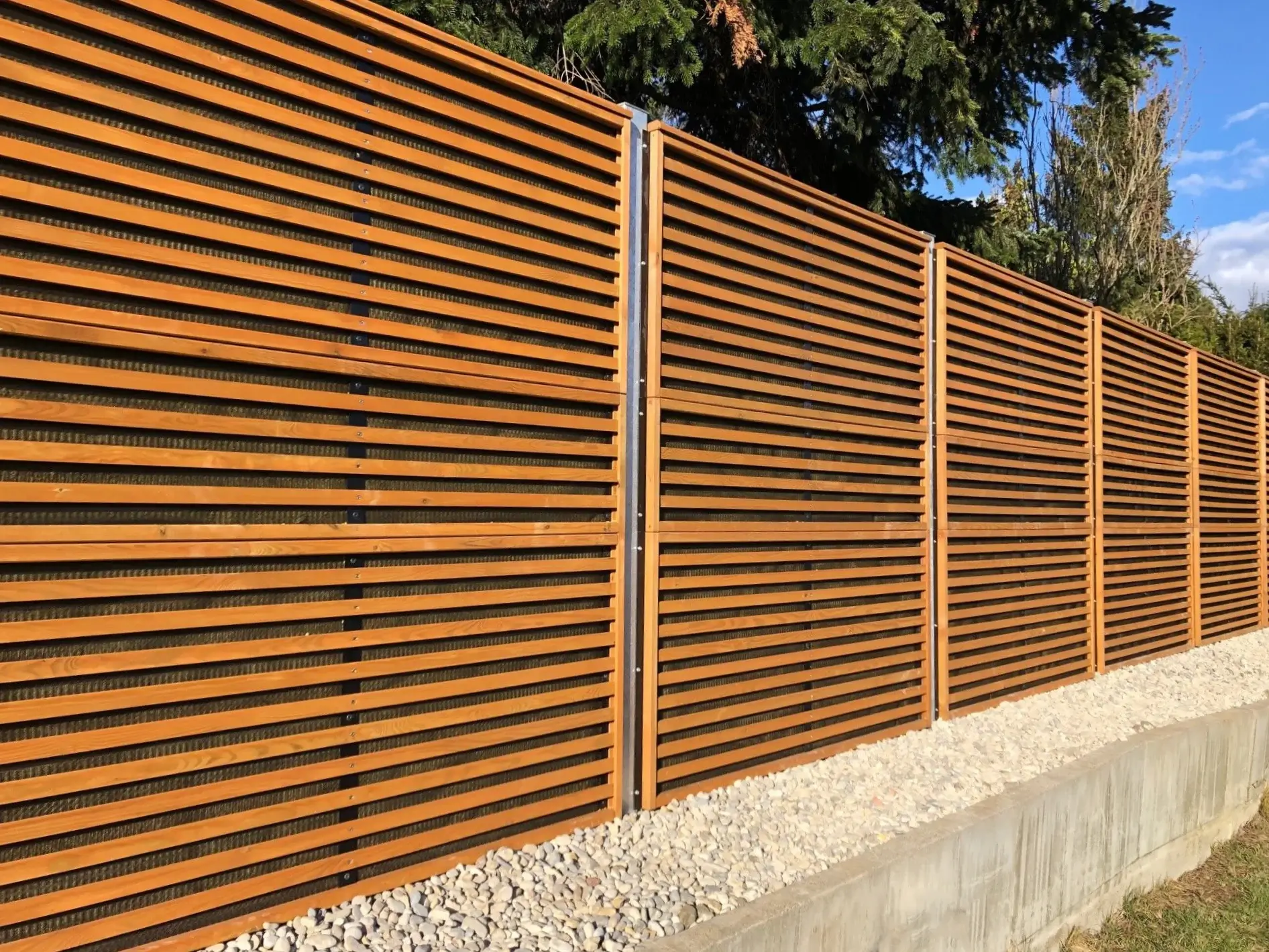
Working out fence slats per metre Perth homeowners need depends on two measurements: the width of each slat and the gap between neighbouring slats. Divide 1,000 mm by the combined slat width and gap. For example, a 65 mm slat with a 15 mm gap uses about 12.5 slats per metre, so you would generally allow around 13 slats. That figure is an ordering allowance rather than an exact fit – 13 slats at 65 mm with 12 gaps of 15 mm actually take up 1,025 mm, so the number that fits a specific opening needs to be worked out separately.
Getting this calculation right helps you plan the appearance of your fence before ordering materials. It also helps you maintain consistent spacing across longer fence runs, gates and corners.
If you are comparing styles, materials or layouts, ALISLAT Fencing and Gates provides fencing solutions designed for residential and commercial properties across Perth.
How to Calculate Fence Slats Per Metre Perth
The basic calculation is straightforward:
1,000 ÷ (slat width + gap width) = approximate slats per metre
Suppose your aluminium fence uses:
- Slat width: 65 mm
- Gap between slats: 15 mm
- Combined measurement: 80 mm
The calculation becomes:
1,000 ÷ 80 = 12.5 slats per metre
Because you cannot install half a slat in the middle of a standard repeating fence section, the final layout normally needs adjustment based on the total panel width.
A fence installer may slightly alter the gaps at the beginning and end of a panel so the finished layout remains balanced.
Why Slat Width Makes a Difference
Wider slats require fewer pieces to cover the same distance. Narrower slats require more.
For example, if the gap remains at 10 mm:
| Slat Width | Combined Width | Approx. Slats Per Metre |
|---|---|---|
| 40 mm | 50 mm | 20 |
| 50 mm | 60 mm | 16.7 |
| 65 mm | 75 mm | 13.3 |
| 75 mm | 85 mm | 11.8 |
| 100 mm | 110 mm | 9.1 |
These figures are useful for early planning, but the exact number across a complete fence section depends on the total opening between posts.
You can explore different fence options through the ALISLAT Fencing and Gates services before deciding which slat profile suits your property.
How Much Gap Should You Leave Between Fence Slats?
There is no single gap that suits every slat fence. Your preferred level of privacy, airflow and visual openness all affect the spacing.
Smaller gaps create a more private appearance. Larger gaps allow more light and airflow through the fence and can give the fence a more open architectural look.
For example, a 65 mm slat with:
- a 5 mm gap uses approximately 14.3 slats per metre
- a 10 mm gap uses approximately 13.3 slats per metre
- a 15 mm gap uses approximately 12.5 slats per metre
- a 20 mm gap uses approximately 11.8 slats per metre
Even a small change in spacing can noticeably change the finished appearance across a long boundary.
Measuring a Perth Fence Correctly
Before calculating the number of slats, measure the usable fence area rather than relying only on the total boundary length.
Start by measuring between the inside edges of your fence posts. Posts, gate frames and structural components take up space and should not be counted as part of the slatted section.
For a 2,000 mm opening between posts using 65 mm slats and 15 mm gaps, the formula gives a starting estimate:
2,000 ÷ 80 = 25 slats
Check that estimate against the layout. If the first and last slats sit hard against the posts, 25 slats and 24 gaps take up 1,985 mm, leaving 15 mm to spread across the gaps. If you want a gap against each post, 25 slats would need 2,015 mm, so only 24 slats fit and the gaps open up slightly. Confirm the opening, post sizes and end-gap detail before ordering or cutting.
For unusual dimensions or a particular architectural appearance, custom slat fencing allows the spacing and layout to be planned around the property rather than forcing a standard panel into the available opening.
Horizontal vs Vertical Slat Measurements
The same spacing principle applies whether slats run horizontally or vertically, but you calculate different dimensions.
For vertical slats, calculate how many slats are required across the width of the fence panel.
For horizontal slats, calculate how many rows are required across the height of the fence.
For example, a 1,800 mm high horizontal fence using 65 mm slats with 15 mm gaps would require approximately:
1,800 ÷ 80 = 22.5 rows
The final spacing may be adjusted slightly so the top and bottom of the fence have an even finish.
Allow for Posts, Gates and Corners
A common measuring mistake is multiplying the total boundary length by the number of slats per metre without deducting other components.
Before ordering materials, account for:
- Fence posts
- Pedestrian gates
- Driveway gates
- Corners and changes in direction
- Retaining walls or masonry sections
- Changes in ground level
A 20-metre boundary does not necessarily contain 20 metres of slatted fencing.
Careful planning is particularly useful for custom fence installation where gates, existing structures and uneven property boundaries affect the final measurements.
What About Privacy and Pool Fencing?
Slat spacing is not purely an aesthetic decision.
For boundary fencing, homeowners often choose smaller gaps when privacy is the priority. However, fences used around swimming pools must meet applicable safety requirements rather than simply using the spacing that looks best.
In Western Australia, pool barriers must comply with applicable building and pool safety requirements, including rules designed to prevent children from climbing through or over the barrier.
If your slat fence forms part of a pool enclosure, confirm that the proposed layout complies with current requirements before installation.
Should Every Gap Be Exactly the Same?
Consistent spacing generally produces the cleanest result, but tiny adjustments can sometimes prevent an awkward narrow gap at one end of the panel.
For example, a calculated layout might leave 23 mm after the final full slat. Rather than creating one noticeably larger space, an installer can distribute that difference across all gaps.
This approach keeps the fence visually balanced while maintaining the intended appearance.
When to Call a Professional
You can calculate basic slat quantities yourself when the fence line is straight and dimensions are simple.
Professional measurement becomes more useful when you have sloping ground, several gates, masonry piers, unusual panel widths or sections that must align with existing structures.
ALISLAT Fencing and Gates can measure the site and plan suitable slat spacing based on your fence dimensions and preferred privacy level. Contact the team if you want help planning a custom fence for your Perth property.
Conclusion
Calculating fence slats per metre Perth properties require starts with a simple formula: divide 1,000 mm by the combined width of one slat and one gap.
Remember that the calculation provides a starting point rather than the final material quantity. Posts, gates, corners, total panel dimensions and small spacing adjustments can all affect the finished layout.
Measure each fence section separately and decide how much privacy and airflow you want before selecting your slat width and spacing. For more complicated layouts, professional measurement can help ensure the fence remains balanced from one end to the other.
Frequently Asked Questions
How many 65 mm fence slats are needed per metre?
With a 10 mm gap, a 65 mm slat uses about 13.3 slats per metre. With a 15 mm gap, the figure drops to approximately 12.5 slats per metre.
How do I work out how many slats fit in a fence panel?
Add the width of one slat to your desired gap, then divide the opening width by that combined measurement for an estimate. Check that the total slats and gaps fit the opening, and adjust the gaps slightly if needed to create an even finish.
Do smaller gaps make a fence more private?
Yes. Smaller spaces between slats reduce visibility through the fence. Larger gaps generally allow more light and airflow.
Should I calculate slats using the total fence length?
Not always. Measure the actual slatted sections between posts and deduct gates, masonry sections and other structures before calculating your material requirements.