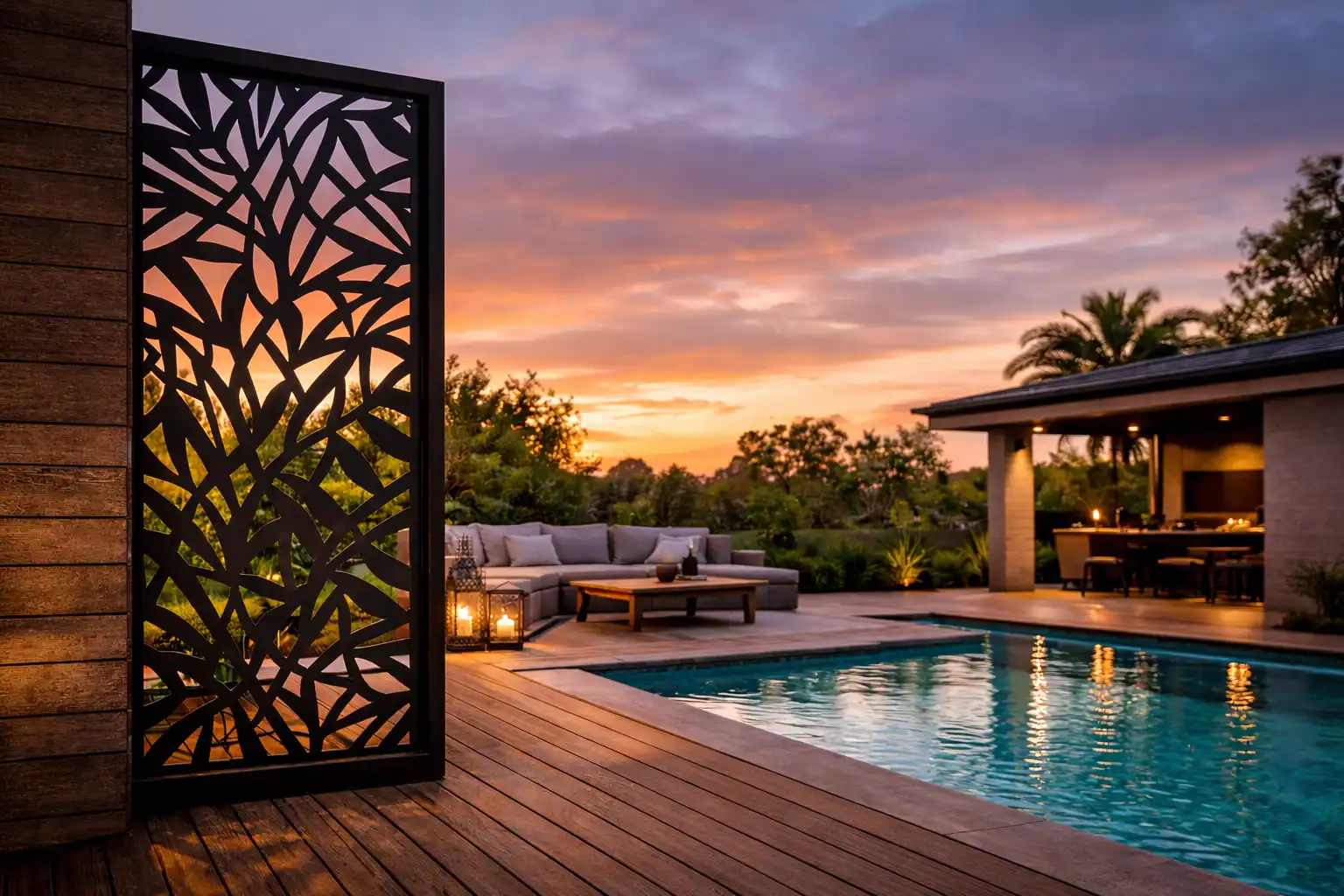
Perth’s backyard barbie culture thrives on open-air living, but sometimes you crave a little more privacy without sacrificing the breeze or the view. That’s where laser cut privacy panels come in – think of them as decorative fences that let fresh air in while keeping prying eyes out.
I remember my own place: a stunning pool and alfresco area that felt a tad too exposed until I found these artistic screens.
They can be a real game-changer – turning a plain boundary into a statement wall. In this guide, I’ll walk you through everything from materials and design trends to council rules and installation tips. By the end, you’ll know exactly how to pick the right laser-cut panel to suit your Perth home and climate.
Why Laser Cut Privacy Panels Are Perfect for Perth
Aussies love blending indoor and outdoor living, and Perth’s sunny climate is no exception. Laser cut privacy panels fit right into that lifestyle. Imagine curling up with your morning coffee behind a stylish metal screen: you’ll feel cocooned in your own space, yet not closed off.
These panels block views effectively and let light and breeze sneak through – so your patio never turns into a dungeon of shadows. In fact, one of the top perks of these panels is privacy with style. You’re not just putting up a bland wall; you’re adding eye-catching artwork to your garden.
There’s a huge variety of patterns out there. You can go for nature-inspired designs – think eucalyptus leaves, banksia flowers or wavy lines mimicking sand dunes – to complement our Aussie flora. Or you can pick bold geometric or abstract motifs for a more modern vibe.
Either way, the panel will cast beautiful dappled shadows as the sun moves, turning your yard into a dynamic art installation. For example, I saw a design with gum leaves laser-cut into steel that instantly gave a backyard a distinctly West Australian feel.
Laser cut panels also double as sun-shades and windbreakers. In Perth’s harsh summer sun, a powder-coated aluminium screen can cut glare and lower the heat on your patio. When the ocean breeze picks up, these screens soften it rather than blocking it completely – you get comfort without the fence effect.
And remember, a well-designed outdoor area can even boost your home’s value by making it more attractive to buyers or guests. So while you’re upgrading your privacy, you’re also adding resale appeal – a smart move for any homeowner.
Choosing the Right Material for Perth’s Climate
One of the first decisions is material. Perth’s hot sun and occasional coastal moisture mean corrosion resistance is crucial. Here’s a quick rundown:
- Corten Steel: This weathering steel forms a protective rust-like patina over time. It’s super durable (50+ year lifespan) and gives that warm, earthy look. Downsides? It’s heavy to install and can leave rust streaks if not sealed. Great if you love a bold, rugged aesthetic and want a no-paint surface in the long run.
- Powder-Coated Aluminium: Very popular in Perth. It’s lightweight, rust-proof and comes in any colour you like (from charcoal black to eucalyptus green). It’s not as bulletproof as steel – a strong knock can dent it – but for most homes it’s sturdy enough. Aluminium panels stay looking fresh for decades with minimal upkeep, which is perfect for our sun-drenched backyards.
- Stainless Steel: Ultimate rust resistance – even salt spray won’t hurt it – but it’s costly. Usually you only see stainless screens in very modern, industrial-style builds (and often just brushed silver in colour). If your block is right on the beach or in a humid spot, this might be worth it.
- Timber/Composite (Honourable Mention): Most laser-cut screens are metal, but you might see timber slats or composite panels as alternatives. They give a warm, natural feel. Just note timber can warp or rot in Perth’s weather unless properly sealed, so usually metal beats wood for longevity.
| Material | Pros | Cons | Best For |
|---|---|---|---|
| Corten Steel | Thick and extremely durable; no painting needed; weathers to a rusty patina. | Heavy to handle; surface rust can rub off on hands or walls. | Bold, earthy designs; long-term projects; coastal-look homes. |
| Powder-Coated Aluminum | Lightweight, corrosion-proof; wide colour range. | Softer metal (can dent or scratch); less “industrial” strength. | Modern look; vibrant colours; bright or shaded Aussie yards. |
| Stainless Steel | Unmatched durability and rust-resistance; sleek finish. | Expensive; fixed silvery colour (unless painted). | Harsh coastal climates; minimalist designs; ultra long life. |
| Timber/Composite | Warm, natural appearance; softer aesthetic. | Can warp/rot if exposed; limited laser patterns. | Indoors or very sheltered outdoor spots; decorative overlays. |
In practice, aluminium is a safe go-to for Perth homes: it won’t rust and it keeps the weight manageable during installation. Corten steel is also widely used by local artists for a dramatic rust-orange finish that still stands up to weather.
I’ve seen multi-coloured panels (cream, grey, navy) that really pop against a garden. Whatever you pick, make sure it’s powder-coated or treated. That extra protective coat keeps Queenslander-happy Aussie rain, humidity, and sea breeze from dulling the finish.
Maintenance is straightforward: just hose off any salt spray or dirt now and then, and check bolts or screws yearly. Corten steel’s patina will look best after it’s fully weathered (sometimes 6-12 months), so don’t fret the initial rust spotting – it’s normal.
If you scratch the paint on aluminium, a quick touch-up keeps it from corroding. Overall, metal panels last far longer and need way less upkeep than timber fences – important when we want that “no worries” lifestyle.
Design Inspiration and Customization
One of the joys of laser cut panels is customization. You’ll find dozens of standard designs ready to order, or you can work with a designer to create something unique.
In Perth, I’ve seen panels shaped like sailing boats, gumtrees, geometric art deco patterns – you name it. Choosing a design is purely personal taste, but here are a few popular approaches:
- Botanical Motifs: Local foliage shapes like banksia, wattle, or fern cut into metal can echo your gardens. It’s a subtle nod to the landscape.
- Geometric/Modern: Crisp lines, repeating shapes or even a bold abstract graphic can give a sharp, contemporary feel.
- Heritage Style: For older homes, wrought-inspired scrolls or lattice patterns work beautifully – think an updated Art Nouveau or Georgian grille.
- Themed Art: If you’re after a statement, go for something like an etching of WA’s coastline, a Perth skyline silhouette, or native wildlife outlines.
Colours matter too. A matte black or charcoal screen is a timeless pick that suits almost any exterior. Corten’s own rust brown is popular for that industrial/earthy look. But hey, why not go wild? Powder-coating means you could have deep blue, forest green or even a bright accent panel if it fits your style.
When planning, think about location and orientation. A panel in the backyard might get full western sun, so a lighter colour could avoid too much heat absorption. Panels framing a pool or BBQ area can double as privacy and decoration. For a side gate or balustrade, narrower, decorative inserts are common.
Consider whether your panel needs to be freestanding (like a fence infill between posts) or wall-mounted (hung on an existing wall). If you’ve got a deck, you could even use a screen as a balustrade or a pergola shade.
The size and shape is totally custom – makers will trim a panel to your exact dimensions. One tip: leave a few millimetres around edges for expansion in summer heat so it doesn’t buckle.
Permits and Local Council Guidelines
Before you drill any holes, it’s smart to check the rules. In Western Australia, regulations on fences and screens can vary by council. As a general rule, single-storey rear fences up to ~1.8 m high are often “exempt” (no permit needed).
Front fences typically have stricter limits (often around 1.2 m solid, or up to 1.8 m if it’s at least half open). Privacy panels topped on an existing fence can count toward total height, so that matters too.
For example, the City of Joondalup’s guidelines explicitly state that a privacy screen above 2.3 m from natural ground level needs planning approval. If you try to extend a standard 1.8 m fence by adding a 0.5 m lattice, that 2.3 m total would cross the line and trigger a permit.
Other Perth councils have similar rules (some even limit any solid fence over 1.2 m). This is where talking to your local council or building department is wise – just search “[Your suburb] council fence regulations” online.
And don’t forget the Dividing Fences Act: if you’re building on a shared boundary, you may need your neighbour’s agreement and cost-sharing. Friendly tip: good fences (and screens) make good neighbours – have a quick chat with them before construction to avoid surprises!
When in doubt, a licensed installer or fence specialist will know the regs. They deal with council paperwork all the time. For example, custom fence installation experts in Perth can advise if your planned panel needs a formal development application.
In short, better safe than sorry: a quick check online or a phone call to your council can save you from having to cut down your dream screen later.
Installation Tips and Costs
Installing a laser-cut panel can be a DIY project if you’re handy, but safety and precision are key. The panels themselves are usually made 2–4 mm thick, so they can be heavy. You’ll need sturdy posts (metal or treated timber) set in concrete, or a strong wall to fix them to. Here are some pointers:
- Measure Twice: Work out the exact opening sizes. Panels come in set heights (often 1800 mm or 2100 mm) and any width up to 3 m. Trim edges if needed, but let installers do it for a clean cut.
- Spacing: For fences, aim posts about 1.8–2.4 m apart (depending on panel length). That keeps the panel securely clamped on both sides. Make sure posts are plumb (use a spirit level!).
- Mounting: Most panels have holes pre-drilled or use clamping brackets. You’ll bolt or clamp the panel to your posts. Use stainless steel fasteners to resist corrosion.
- Alignment: Lay panels flat on the ground to check alignment of the design across multiple panels. Level each one carefully; a crooked panel will annoy you later!
If this sounds like a lot of work, consider hiring a pro. Talking to custom fence installation experts can be a lifesaver – they handle the heavy lifting and ensure everything meets building codes. It’s true that professionals cost extra, but they can often get the job done faster and spot any pitfalls (like underground services or permit issues) that you might miss.
As for cost, laser cut panels are usually priced per panel or per square metre. Expect rough figures like $300–$600 per panel (say 2 m²) for basic designs in standard aluminium. Intricate patterns, larger sizes, or premium materials (like Corten) will cost more. Then add installation: maybe a few hundred dollars per panel if you hire it out.
In total, a single metre of decorative fencing (panel plus install) might run you $400–$800. Prices vary a lot by design and company, so get a few quotes. Often companies offer free quotes — they’ll come measure and show you sample colours and designs in person.
Finally, think ahead about maintenance during installation. If you live near the coast, wipe salt off panels occasionally (a hose-down after big storms does wonders). Trim any vegetation that rubs on the panel edges.
And remember: metal panels are low-maintenance compared to timber. No repainting of every year like a wood fence. Just a quick clean and occasional polish of stainless or touch-up paint on scratches, and you’re set for decades.
Conclusion
Laser cut privacy panels are a stylish, modern way to add seclusion to your Perth home while keeping that relaxed outdoor vibe intact. By choosing the right material (aluminium for light and colour, or Corten for rustic charm), picking a pattern you love, and checking local fence rules, you’ll end up with a feature wall that truly stands out.
With proper installation – whether DIY or via fence pros – your new screens will not only keep neighbours’ eyes away but also give your yard a designer edge.
Imagine ending your day behind a beautiful, custom metal screen – the breezes still flutter the leaves of nearby trees, and the setting sun casts lace-like shadows through the cut-outs.
Sounds inviting, right? Ready to give your backyard a privacy makeover?
Contact local installers or suppliers for a quote on a design that’s uniquely you. When you have that perfect panel in place, sit back, relax, and enjoy the best of open-air living – with all the privacy you need.
Inspired by these ideas? Reach out to a local fencing or landscaping specialist today to discuss a custom laser-cut privacy panel for your home. Upgrade your outdoor space and share your new oasis with friends!
Frequently Asked Questions
Do I need a permit for a laser-cut privacy screen in Perth?
Most low backyard fences (around 1.8 m) are okay without approval, but added screens can tip you over the height limit. For example, if a council’s cutoff is 2.3 m from ground, anything taller needs planning permission. Always check your local council’s fence rules or consult a professional to be sure.
What material should I choose for a laser privacy panel?
In Perth’s climate, powder-coated aluminium is a top pick: it won’t rust and can be in any colour. Corten steel is trendy too, since it forms a protective rust finish and looks earthy. For ultimate corrosion resistance (especially near the beach), stainless steel is unbeatable but pricier. Pick based on your style and how much maintenance you want.
Can I install a laser-cut panel myself?
If you’re handy with tools, yes – but be prepared for some heavy lifting and precise measuring. You’ll need solid posts or a wall mount and the right fasteners. If this sounds tricky (or if you want a guarantee it’s done right), a professional fence installer is worth considering. They’ll align the panels perfectly and handle permits if needed.
How do I maintain a laser cut privacy panel?
The good news is these panels are low-maintenance. Every few months just rinse them with a hose to remove dust or salt. Check any exposed screws or welds and touch up paint if scratched. Corten steel panels will change colour naturally as they weather, so no painting needed. With a little care, a metal privacy panel will stay looking great for years.