
Decorative privacy fencing is like sunglasses for your backyard – it shields you from prying eyes while adding serious style points. In Perth’s sunny, suburban landscapes, everyone appreciates a bit of seclusion on their veranda or in the garden. But let’s face it: a plain fence can feel like an eyesore or even a bad hairstyle.
A decorative privacy fence, on the other hand, is privacy with personality. It conceals your BBQ session from nosy neighbours and turns your yard into a stylish retreat. Think of it as the frame around your outdoor living masterpiece – sleek slats, laser-cut metal screens, or mixed-material panels that define your space and make a statement.
Decorative privacy fencing goes beyond just putting up a barrier; it weaves in design flair. For example, a horizontal timber slat fence with a rich stain gives a warm, modern vibe, while a pattern-cut metal screen offers a crisp, artistic feel. Even better, many decorative panels combine plants or lighting to create an outdoor feature wall.
The bottom line? Decorative privacy fencing doesn’t just block views – it boosts curb appeal and even property value by enhancing your home’s look. As one landscaping expert notes, these fences “protect privacy, add security, and boost the value of your property”. In short, with the right design, your fence can become a conversation piece rather than a plain wooden wall.
Modern decorative timber slat fence with lush grass and shrubs, blending privacy and style.
Why Outdoor Privacy Matters in Perth
Ever tried enjoying your morning coffee in your backyard, only to feel like you’re on display? Perth homes often sit on cozy suburban blocks, and neighbours’ windows or the street can be too close for comfort. That’s where good fencing comes in.
Privacy isn’t just about hiding – it’s about comfort. A well-designed fence lets you lounge outdoors, work from your deck, or entertain friends without feeling watched. It’s your zone of sanctuary amid the open Aussie sky.
In Perth’s laid-back lifestyle, outdoor living is huge. But Perth’s climate – scorching summers (with UV indexes averaging around 12 in summer months) and salty sea breezes – can also feel intense if your space isn’t comfortable.
A solid fence provides shade and a wind buffer, making it cooler and cozier. Plus, if you’ve got kids or pets, a solid, high fence keeps them safely contained while you relax. It even has practical perks: a fence can dampen street noise a bit, give your garden a windbreak, and define property lines clearly. In sum, investing in good fencing is like upgrading the “outdoor room” of your home – it reclaims your private slice of Perth’s outdoors.
“Decorative privacy fencing is the best way to get that mix of security and style,” one local fence specialist observes. A strong, attractive fence doesn’t just hide you from the neighbours; it defines your space, adding comfort and value to your home. When you pick a design and material suited for our WA sun and sea air, the fence becomes a natural part of the landscape.
What Is Decorative Privacy Fencing?
At its core, decorative privacy fencing means using stylish materials and designs for your privacy fence. Unlike a basic corrugated Colorbond or untreated timber plank fence, a decorative fence incorporates patterns, varied textures, or mixed materials. For example:
Laser-cut metal panels: Steels or aluminium sheets with cut-out patterns (geometric shapes, leaves, waves). They cast pretty shadows by day and can be backlit for ambiance at night.
Wood slat or screen fences: Horizontal or vertical timber planks with small gaps or lattice sections, sometimes interspersed with metal or glass. Think modern wood “screen” that lets light filter through.
Mixed-material designs: A short stone or brick base topped with wood or metal slats, or metal frames filled with timber battens. These combine strength and aesthetics.
Green privacy walls: A wooden or metal frame with integrated planters or trellises, letting vines grow up for a living, breathing screen.
A decorative privacy fence still serves the same privacy and security purpose as any fence, but it does it with extra style. It often uses premium materials (e.g., powder-coated aluminium, hardwood, composite timbers) and requires craftsmanship to get alignments and finishes just right. The result? Your fence is a focal point, not just a functional barrier.
As one industry guide puts it, decorative fencing “combines security with visual appeal” by using materials like aluminum or timber in creative ways. You enjoy the best of both worlds: a secluded yard and a beauty to look at.
Benefits of Decorative Privacy Fencing
Decorative privacy fences pack a punch of advantages beyond plain ones. Here are some of the key perks:
Enhanced Privacy and Security: Obviously, it blocks views. Taller solid panels or tight lattice mean your neighbors (and the street) can’t see in. And with the right design (like narrow spacing and sturdy build), it can deter trespassers too. You get a private oasis in the city.
Aesthetic Appeal: A custom fence matches your home’s architecture and landscape. You can pick colours and finishes (like dark-grey Colorbond, natural timber stain, or crisp white lattice) that complement your style. This upgrade alone can boost curb appeal and property value.
Noise Reduction: While not soundproof, dense fences do muffle some street noise (think busy Perth road or barking dog next door) to create a quieter yard.
Wind and Glare Shield: Perth’s winds and glare can be harsh. A solid or semi-solid fence acts as a windbreak and provides shade, making your outdoor areas more comfortable even in Perth’s blazing sun.
Defined Outdoor Zones: It clearly marks your boundary and segment of outdoor living – whether that’s a BBQ corner, a pool area, or a kids’ play spot – giving each area purpose and a sense of “room” without walls.
Plant Support and Green Privacy: Many decorative fences incorporate pergola-like structures or trellises, letting you grow vines, creepers or install planter boxes. This adds greenery and a natural layer of screening (ivy on a lattice fence is a classic, for example).
Customization: You can tailor height, materials and patterns to your needs. Want full coverage up high? Use solid panels. Want airflow and a modern look? Use slats or screens. The creative options are endless.
Durability: When built with the right materials, these fences are long-lasting. Using corrosion-resistant metals or treated hardwood means it can withstand Perth’s sun and salty coastal air better than untreated wood.
Decorative vs. Standard Fencing Features
| Feature | Standard Fence | Decorative Privacy Fence |
| Privacy | Blocks view (often plain) | Blocks view and adds aesthetic patterns or textures. |
| Style/Curb Appeal | Simple, functional look | Customisable patterns, colours, mixed materials; enhances yard’s design. |
| Materials | Common materials (e.g., basic timber, plain steel) | Premium or mixed (e.g., powder-coated aluminium, hardwood, composite). |
| Airflow & Light | Usually solid (no gaps) | Options for gaps (slats, lattice) to allow light/air while preserving privacy. |
| Security | Standard height (≤1.8m) solid walls | Can be built taller or with anti-climb design (narrow slats, no footholds). |
| Maintenance | Varies (e.g., treated pine needs regular paint) | Similar upkeep but materials like aluminium/composite need less repainting. |
| Cost | Lower (mass-produced panels) | Higher for custom panels and installation, but may save on long-term upkeep. |
Best Materials for Perth’s Climate
Perth’s climate is Mediterranean: baking hot, dry summers and mild, wetter winters. On top of heat and UV, many homes face salty sea air and occasional strong winds. So materials need to be tough. Here are top picks:
Powder-coated Aluminium/Colorbond Steel: These are the Aussie classics for a reason. They won’t rust or rot, and the baked-on powder coating resists fading under UV. In fact, Colorbond steel fencing is designed for WA’s harsh conditions – it “excels in coastal areas and arid climates” because of its corrosion resistance. Aluminium slats or perforated screens (e.g. laser-cut panels) give a modern look and are very low-maintenance – just a quick hose-off now and then.
Tropical Hardwood (Jarrah, Blackbutt, Spotted Gum): These dense woods are naturally durable and termite-resistant (crucial in WA) without heavy chemicals. They age to a beautiful silver-grey if left unsealed, or you can seal them for rich colour. The downside: they cost more and still need an occasional oil or stain re-coat to keep UV damage at bay.
Treated Pine/Timber: A budget-friendly choice, but think of it as high-maintenance. Treated pine fence posts and panels must be regularly re-stained or painted to protect from sun and moisture. Left unchecked, they’ll fade, warp or splinter. And don’t forget termites: untreated timber is tempting to insects, so only use treated wood (or include a termite barrier).
Composite (PVC or Wood-Plastic Composite): Made from recycled timber fibres and plastic, composite boards resist rot, termites, and salt spray. They won’t warp or splinter and can mimic wood grains. The cons? They can fade or stain if not cleaned, and they’re pricier than plain timber. Overall, composites are “PVC fences” that stand up well to harsh weather.
Vinyl (PVC): Not as common in Perth yards, but vinyl fences are waterproof and insect-proof, with no need to paint. They can get very hot to touch in sun and sometimes look a bit plastic compared to wood or metal.
Other Options: Wrought iron or steel ornamental fences look pretty but usually don’t give full privacy (they have bars or decorative gaps). You could use them as toppers above a brick wall for style. Gabion walls (wire baskets filled with stone) are striking but expensive and very permanent – more a retaining wall than a typical fence.
Termite Tip: In Western Australia, termite activity is a serious threat to timber. The WA government advises using treated timber for fences and building in termite management measures at design time. That means using steel posts for wooden panels, or applying chemical soil barriers. If you’re really worried, go with metal slats or composite – they won’t feed termites at all.
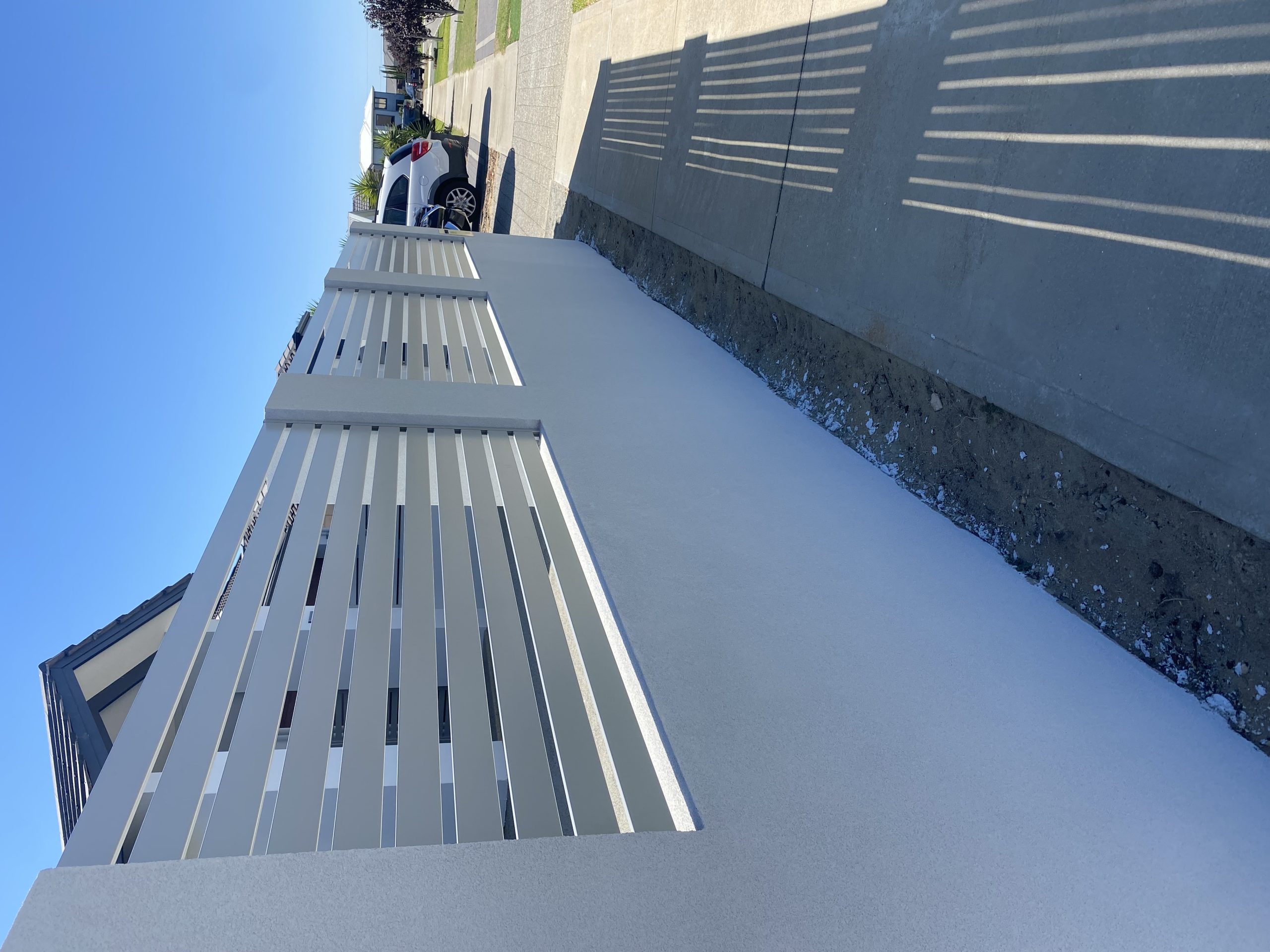
Aluminium slat fencing with clean modern lines (highly durable in Perth’s sun and salty air)
Design & Style Ideas
Decorative privacy fences let you flex your creativity. Here are some trend-savvy ideas popular with Perth homeowners:
Horizontal Slats: This clean, contemporary look is very in vogue. Horizontal timber or aluminium slats (even mixed) create a wide, spacious feel. Stain the wood a dark colour or paint slats black/grey for a chic vibe that pops against greenery.
Patterned Screens: Laser-cut steel or aluminium panels with patterns (e.g. geometric, leaf motifs, custom art) can be standalone accents or inserted into a wood frame. They filter light beautifully and give a bespoke touch. At night, add uplights behind the panels to cast decorative shadows.
Mixed Materials: Combine a low stone wall (e.g. sandstone or rendered block) with a wooden or metal slat top. Or use vertical posts of steel with timber infill. This mix adds texture and durability – stone and steel resist weather, wood warms up the look.
Green Screens: Build in planter boxes or lattice sections on your fence. Train vines like jasmine or bougainvillea to climb, and you get a living privacy wall. Not only does it look lush, but the foliage also softens heat and noise.
Color and Paint: Don’t limit yourself to “fence brown.” Dark charcoal or deep green fences can feel very modern. A white fence with greenery in front feels crisp and clean. You can even do an ombre or block colour scheme.
Lighting & Accessories: Rope or LED strip lights along the top rail, or lanterns hung on posts, turn your fence into mood lighting at night. Hooks on the fence let you display potted plants or art (weather-resistant metal art or rust patina pieces are popular).
Height Play: If you need more height for privacy (subject to local limits), consider a stepped or sloped design. For example, a fence that’s 2m at one end and tapers to 1.8m. Or add a pergola-like lattice on top of a solid lower panel. Tip: WA’s design rules typically limit solid front fences to 1.2m (with permeable above), but backyard fences can often go to 1.8m without permits.
When styling your fence, coordinate with your house exterior – use similar colours or materials for harmony. And think about scale: a very tall fence suits a large property; a compact city yard might benefit from lighter-coloured slats to keep it feeling airy.
Comparing Decorative vs. Standard Fencing
To see how decorative fences stack up, here’s a quick comparison table of common fence materials and styles:
| Material/Type | Standard Fence | Decorative Privacy Fence |
| Colorbond Steel | Plain vertical corrugated panels (solid) – very strong and weatherproof. | Pattern-cut panels or slatted-style Colorbond (solid base with decorative metal inserts). |
| Timber (Treated) | Vertical pine planks or paling (simple, cheap). | Horizontal hardwood slats or lattice patterns (more design detail). |
| Aluminium | (Less common plain) Custom slats or lattice panels | Sleek aluminium slats, perforated screens, mixed wood/aluminium. |
| Composite/PVC | Standard white or grey vinyl panels. | Composite slats or screens in wood-tone or bold colors. |
| Wrought Iron | Classic wrought iron (low privacy). | Wrought iron with privacy inserts or roll-up bamboo shades behind. |
Decorative variants usually cost more (because of custom patterns and heavier labour), but they reward you with better curb appeal and longevity if chosen right. For example, buying a basic fence panel might cost a couple of hundred dollars, whereas a custom laser-cut panel could be $800+. But consider it a long-term upgrade to your home’s style and security.
Maintenance Tips for Longevity
A fence only looks great if it’s well cared for. Perth’s sun and coastal air can fade colours and encourage rust or rot. Here’s how to keep your decorative fence top-notch:
Regular Cleaning: Hose down metal fences (especially near the coast) every few months to remove salt spray and dust. For wood, use a gentle brush and soapy water to wash dirt off. Clean surfaces helps finishes last longer.
Inspect Often: Check once a season for any cracks, loose boards or rust spots. A tiny chip in a paint finish or a nail popping out is easy to fix now but can cause bigger damage later. Spot-seal any exposed wood or primer on metal to halt corrosion.
Re-seal Timber: Even hardwoods benefit from an annual oil, stain or sealer coat. This keeps UV from bleaching the wood and prevents moisture ingress. Skipping this can make timber fade and eventually fall apart. If you see a dull grey onset, it’s time to recoat.
Mind the Details: Tighten screws/bolts as needed. Decorative fences often have many fixings or panels; a loose joint can wobble in Perth’s winds. Ensure any lighting or added features on the fence are weather-rated.
Pest Check: Even if you use treated timber, termites can infiltrate. Look for mud tunnels along the base of wooden panels. If your area is bushfire-prone, clear leaves and debris from around the fence, and consider non-combustible materials (WA building codes incorporate Bushfire Attack Levels for fences near bush areas).
Landscaping: Trim plants and trees so they don’t push against the fence. Vines and branches can hold moisture or scratch surfaces. Give your fence a couple of hand-widths of clearance on either side if possible.
Remember, “little problems have a habit of snowballing”. A well-chosen decorative fence won’t demand daily care, but a bit of annual attention (and an honest look) will pay off in longevity. The metal fences in particular are low-maintenance – no sanding, just the odd wash – whereas wood is “the high-maintenance kid” of fencing. Pick a material you’ll actually care for.
Local Regulations to Keep in Mind
In Western Australia, there are some rules about fence heights and transparency (especially at the front of the house). These don’t usually ban decorative screens, but they do govern how solid fences can be.
For example, the City of Melville’s local rules say front fences taller than 1.2m must include transparent elements (like slats at least 50mm apart) to meet “visually permeable” requirements. Essentially, if it’s street-facing, it can’t be a solid wall over 1.2m – you need gaps or a see-through section. Beyond that, up to 1.8m is often allowed with the right open pattern.
For dividing fences between neighbours’ backyards, WA’s Dividing Fences Act 1961 generally lets you build up to 1.8m high without special approval. However, if you plan anything unusual (like going higher than 1.8m or using very heavy materials), it’s wise to check with your local council and review the official guidance from the Department of Local Government, Industry Regulation and Safety . And if either home has a pool, the pool fence rules take priority (even a privacy fence might need self-closing gates if it forms part of the pool barrier).
Bottom line: most decorative privacy fences in a backyard won’t need development approval if under 1.8m and away from the front boundary. But always check local rules first. For instance, Melville City’s planning guide notes specific height and visibility limits on front fences. If in doubt, a quick chat with your council’s building office can avoid headaches later.
Is Decorative Privacy Fencing Worth It?
Let’s be honest: decorative fencing is an investment. It usually costs more upfront than a bare-bones fence. Labor is often higher too, since custom panels or heavy materials need careful installation.
But many Perth homeowners find the payoff well worth it. A striking fence can increase your home’s resale appeal and create a better outdoor lifestyle. As the experts say, splurging a bit on quality materials and design up front “usually pays off” with a fence that lasts and stays in style.
Moreover, unlike a deck or renovation, a new fence immediately changes your everyday life. You’ll feel more relaxed outside, enjoy better privacy and security, and even have nicer outdoor areas for gatherings. If you factor in the value-added to your home (just like the way a renovated kitchen adds value), decorative fencing is often justified.
Of course, you should balance style with function. Don’t pick an intricate laser-cut pattern if you need maximum screening. And avoid cheap flash – sometimes the simplest classic designs (well-built wood slats or timber screen panels) look best and cost less over time. The key is to choose a trusted installer, as even the fanciest design looks off if it’s uneven or wobbly.
In short, if you love the look and have the budget, decorative privacy fencing is a smart splurge for a Perth home. It’s far more than wall for wall’s sake – it defines your space, adds “curb envy” and can even give back in value and comfort.
Conclusion
A gorgeous, well-built decorative privacy fence is one of the smartest home upgrades for Perth living. It gives you seclusion to enjoy your yard, security for your family, and style that elevates your home’s look.
By choosing climate-resilient materials (like powder-coated aluminium or tropical hardwood) and a design you love, you create an outdoor space that truly feels yours. Remember to account for local regulations (like front fence height limits) and routine maintenance – even the toughest fence needs a little TLC.
Ready to Transform Your Outdoor Space? The right Decorative Privacy Fencing can make your backyard more private, secure, and visually appealing. If you’re looking for expert craftsmanship and stylish fencing solutions in Perth, Reach Out Alislat Fencing & Gates today for professional advice and a no-obligation quote.
FAQs
What is decorative privacy fencing?
A decorative privacy fence is a fence built to block views and look great. It uses stylish materials (like powder-coated metal or hardwood), patterns (slats, laser-cut panels), or a mix of textures to make your fence an attractive feature while still keeping your yard private.
Is decorative privacy fencing suitable for Perth weather?
Yes – if you pick the right materials. For example, powder-coated aluminium panels or Colorbond steel resist Perth’s hot sun and salty sea air. These won’t rust or fade easily. Timber can work too (especially hardwoods), but it needs regular sealing here.
How much does decorative privacy fencing cost?
Costs vary a lot. A simple decorative panel might start a few hundred dollars, while custom laser-cut or mixed-material screens can be $800 or more each before installation. Installation labor for detailed designs is also higher than a plain fence. However, you’re paying for a long-lasting, eye-catching upgrade.
What is the best material for a privacy fence in Perth?
Many Perth homeowners like aluminum or Colorbond steel for low upkeep and weather resistance. If you want wood, use durable hardwood (Jarrah, Blackbutt) with termite treatment. Composite lumber is another great, rot-resistant choice. Avoid untreated pine unless on a tight budget.
Do I need council approval for decorative fences?
Generally, dividing fences up to 1.8m don’t need approval in WA. Front fences have stricter rules (solid part ≤1.2m, then slats max 1.8m). Always check your local council’s guidelines before building.