
Imagine a fence that hardly ever needs your attention, stands up to Perth’s blazing sun and gusty sea breeze, and looks effortlessly stylish. Aluminium slats do exactly that. Many homeowners choose aluminium slat fencing when replacing ageing timber or steel fences due to its durability and low maintenance.
In this post, we’ll dig into why aluminium slat fencing is such a smart, low-stress choice for Australian homes. You’ll see how it tackles common woes (warping, rust, endless repainting) and why it’s tailor-made for Perth’s climate and local rules.
Built to Last in Perth’s Weather
Let’s start with the tough stuff. Timber fences love to bow, splinter or invite termites. Colorbond steel can dent, chip and even rust, especially near the coast. By contrast, Aluminium slats are highly durable and resistant to warping, cracking, rot, termite damage, and corrosion when properly powder coated. They resist warping, cracking, rot and termite damage.
Powder-coating seals the deal against UV fade and salt corrosion. In short, aluminium stays “straight and strong” under heavy rain, blazing sun and seaside spray. The result? A fence that keeps its shape and colour for decades, not just a few years.
Traditional timber fences (like this white picket fence) look charming at first but often warp, fade or rot over time. Aluminium slats sidestep these issues entirely.
Aside from rain and sun, Perth’s strong winds can rip apart flimsy fences. High-quality aluminium panels hold firm even in storms. A professional install (deep-set posts and galvanised brackets) means your slats won’t lean or flutter. This kind of durability is crucial in Perth’s north or coastal suburbs, where weather stress is real.
In fact, one supplier notes that an aluminium slat fence “won’t warp, rot, or attract termites” and “won’t rust” like steel. In practice, that means installing once and enjoying your fence for decades – the ultimate solution to “will my fence fall apart?” worries.
Spend Time Living, Not Maintaining
One of the key advantages of aluminium slat fencing is its low maintenance requirements. Aluminium slats would remove it from your vocabulary. A big draw of aluminium fencing is that you almost never have to paint or seal it. Want to refresh timber? Sand and seal. Colourbond? Touch up chipped edges. Aluminium? Grab a hose. A quick spray-down with water or mild detergent usually clears off dust and pollen. That’s it – no ladders, no brushes, no fumes.
It’s such a breeze that many Perth homeowners are shocked how little effort is needed. As one fencing expert puts it: “Do you really want to spend hours every year sanding, painting or fixing a timber fence? Another big advantage of aluminium slat fencing is how little effort it takes to keep it looking great”.
Powder-coated aluminium holds its colour without extra work, so your fence stays vibrant with just the occasional wash. Compared to the endless cycle of staining and termite checks, aluminium is basically maintenance-free. Compared with timber fencing, aluminium typically requires less ongoing maintenance throughout its lifespan.
Sleek Style and Smart Design
Beyond toughness and low upkeep, aluminium slats make any yard look ultra-modern. Picture clean, horizontal lines (or vertical if you prefer) framing your home – it’s the architectural upgrade many Aussies crave.
Unlike timber, there’s no “ugly side” of the fence to leave neighbors eyeing your shabby fence boards. Aluminium slats are uniform on both sides, so everything looks polished no matter which way you face the fence.
And we’re not just talking Miami Beach glamour – these fences fit any vibe. Want a minimalist black screen around your pool? Done. Prefer a warm, wood-grain effect that echoes your decking? No problem – many slats come in timber-look or colour-matched powder coats. You can even mix solids and open spacing for a unique look. The upshot: consistent colour and finish across every panel, with modern designs that make your property pop, not plod.
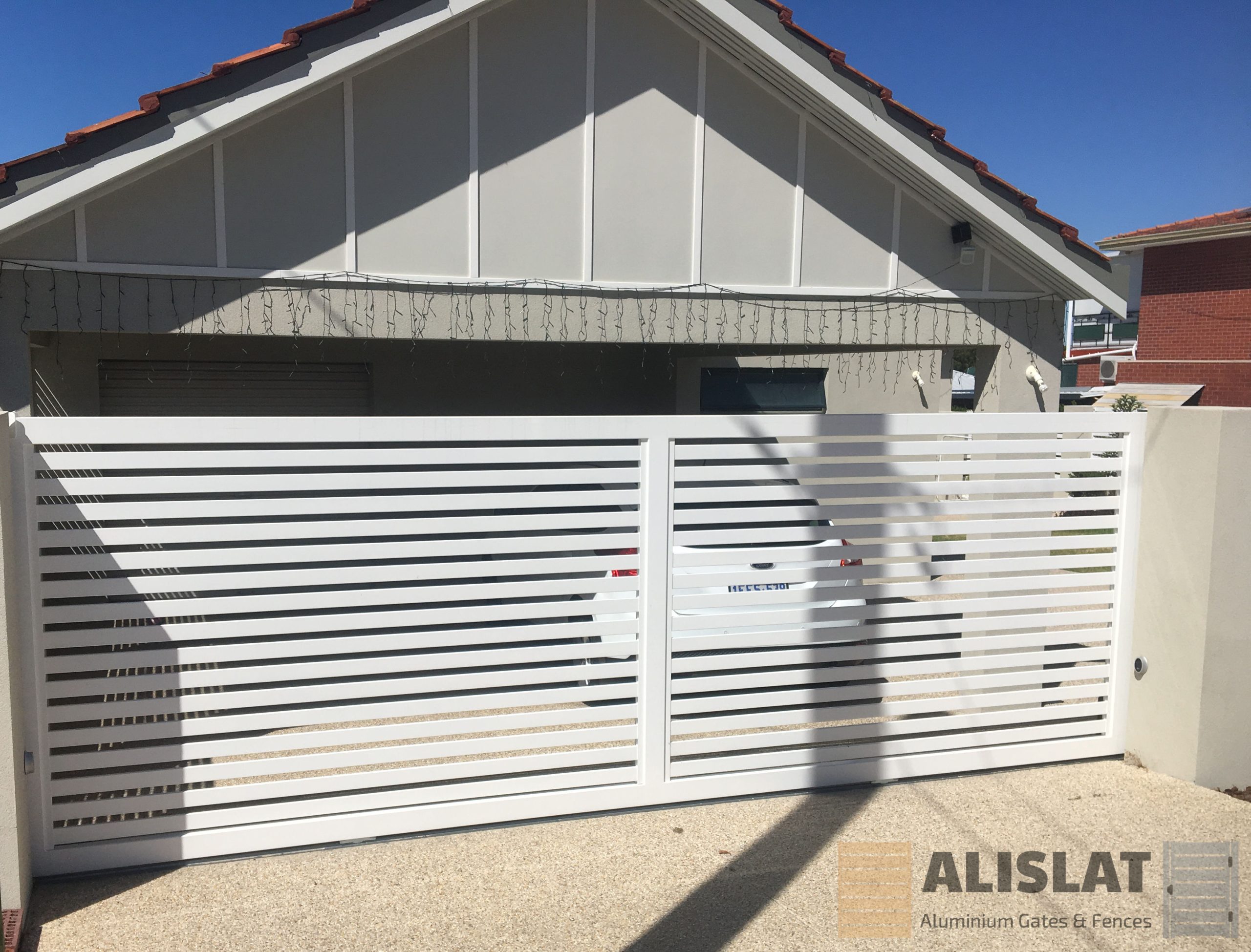
Chain-link or see-through fences are common but utilitarian. By contrast, aluminium slats (pictured) create a sleek, semi-privacy screen. Each slat can be spaced to suit your taste – more privacy, more airflow, or a balance of both.
Another neat trick: slat spacing. You can adjust the gap between slats to control privacy and light. Fancy a view of the garden? Leave a few millimetres between rails. Crave full seclusion? Narrow the gaps to just 10–30mm. This flexibility also helps meet Western Australia’s front-fence rules.
For example, if your fence goes over 1.2 m high, regulations demand at least 1/3 open sections (usually 50mm gaps) for “visual permeability”. Aluminium slats easily satisfy this – just pick a supplier who custom-builds panels to code. The end result is a fence that looks “clean and contemporary” while complying with applicable local planning requirements.
Comparing Fencing Materials
To see why aluminium slats shine, let’s quickly compare them to other popular fence types:
Timber: Warm and natural-looking, but prone to rotting, splintering and termite attacks in Perth. Needs sanding, staining and repairs every few years.
Colourbond Steel: Solid privacy and rust-resistant panels, but can dent and feels industrial. Heavy sheets aren’t easy to install on uneven ground.
PVC (Vinyl): Very low maintenance and long warranties, but typically more expensive upfront. Colours resist fading well. However, PVC is flexible rather than rigid, so it flexes on impact (good for kids or dogs but not as sturdy).
Aluminium Slats: Stronger than PVC and lighter than steel, with excellent resistance to rust, insects and UV. Offers both privacy (when slats are close) or airflow (when spaced). The sleek, symmetrical look is more modern than timber.
| Feature | Timber | Colourbond Steel | PVC (Vinyl) | Aluminium Slats |
| Durability | Fades, warps, termites | Rigid but can dent, needs careful sealing | Crack/chip-resistant, 30+ yr warranty | Resists warping, rust, termites |
| Maintenance | High – annual painting/sealing | Medium – wash; repair dents | Minimal – wash, no painting | Very low – occasional wash; no painting |
| Aesthetics | Traditional warmth, but “ugly side” | Smooth uniform panels | Bright plastic look | Sleek, uniform on both sides |
| Cost (initial) | Low-to-medium | Medium | High | Medium-high |
| Lifespan | ~10–15 years | ~20 years | ~25–30 years | 30+ years (with quality coating) |
| Eco-Friendly | Renewable wood (treated) | Recyclable steel | Recyclable but plastic | Highly recyclable |
Each column represents typical pros and cons. As you can see, aluminium slat fencing combines many advantages: weather durability, low upkeep, recyclability and strong visual appeal. It’s a modern material that literally outlasts wood and often “outclasses” steel in salty air.
Tailored for Perth’s Climate and Rules
Perthers know the drill: hot summers, sudden storms and even bushfire risk in some suburbs. Fortunately, aluminium slats handle heat better than timber or PVC. A good powder-coat finish means colours won’t blister or peel under our fierce UV.
Near the ocean, salt spray can rust untreated metal; aluminium just laughs it off (though check that fasteners and posts are also corrosion-resistant). If bushfires are a concern, aluminium is safer than wood: it won’t burn, just melt at high heat.
We also have to dance with local regulations. According to the WA Government’s Planning Codes and State Planning Policies, including the Residential Design Codes (R-Codes), any front fence over 1.2m must be at least one-third open. Traditional colourbond or wooden panel fences can struggle with this rule without looking patchy.
Aluminium slats offer an elegant fix: choose 50mm slats with 50mm gaps (for example) to hit that 33% open requirement. Councils like Bayswater and Vincent explicitly point to slatted designs meeting their “visual permeability” clause.
Customisation shines here too. You can dial the height up to the 1.8m maximum, still keeping the top open, or even add decorative lattice or a slat topper. Because aluminium panels can be built on-site to fit any slope or angle, you avoid awkward cuts and mismatches that timber often forces. All told, a well-designed aluminium slat fence checks every box: compliant, wind-resistant, and of course, stunningly good-looking.
Green, Smart, Value-Packed
If you care about the environment, aluminium is a win. It’s the most abundant metal in the Earth’s crust and 100% recyclable without losing quality. Unlike timber, there’s no need for chemical preservatives or paints that wash off over time.
Longer life means less waste – you’re not ripping out rotten boards every decade. Many homeowners these days feel good about investing in a sustainable solution that also boosts curb appeal.
Money-wise, aluminium slats often save you in the long term. Yes, the upfront cost can be higher than a cheap timber fence. But when you factor in the near-zero maintenance, lack of replacement lumber, and no termite treatments, the math looks very favourable. Experts note that “over 10 years, PVC is typically 30–40% cheaper when maintenance costs are included”, but aluminium still outshines timber and steel in longevity. For busy professionals and young families (our target audience), the time and hassle saved – plus a fence that ends up costing less to own – is a major selling point.
For example, a local case study has aluminium slat panels starting around $250/m² (installed, posts included). Compare that to a timber fence plus a new coat every few years. After a decade, aluminium often looks like the smarter investment. You get to enjoy your weekends at Cottesloe Beach instead of painting and repairing.
Quick, Clean Installation
Installation time is another surprise perk. Aluminium slat systems are lighter than solid steel sheets, so they’re easier for installers (or handy homeowners) to work with. One contractor I know quips, “Most installs in 1–2 days, quicker than timber”. Since panels are typically pre-built on site, they fit uneven ground seamlessly without endless tweaking. Colorbond sheets can bow or crease during handling; slat frames stay rigid yet manageable.
Because aluminium is about one-third the weight of a comparable steel panel, your posts and footings can be a bit lighter too. This can reduce installation time and cost. And if you’re already replacing an old fence, many installers will take out the old one and leave the site clean – one less headache for you. In short, expect minimal fuss: nice neat panels go up fast, and that’s another way aluminium slats solve problems for busy Perth homeowners.
Conclusion
When you add it all up, aluminium slats check nearly every box for an ideal outdoor fence. They’re tough against rot, rust and termites; they need almost no upkeep; and they look modern without the upkeep of timber. They flex to your design needs and even give you an eco-friendly boost. All that stands between you and this sleek fence are a few decisively simple choices (like getting a quote from a trusted local installer).
So ditch the fret of warping boards or peeling paint. With aluminium slat fencing, your yard can stay private, stylish and hassle-free year after year – and you’ll finally have more time to enjoy Perth’s great outdoors.
Ready to transform your fence? Get started by chatting with a professional installer and see how aluminium slats can work for your home.
FAQs
What are aluminium slats used for in fencing?
Aluminium slats are narrow metal panels (horizontal or vertical) used to build fences, gates, privacy screens and pool barriers. They offer a sleek, modern look with strong durability and customisable spacing.
Are aluminium slats cheaper than timber over time?
Aluminium slats often cost more upfront than basic timber, but they last far longer and need almost no maintenance. Over time, saving on paint, repairs and termite fixes usually makes aluminium the more economical choice.
Can aluminium slat fences handle Perth’s climate?
Yes. Aluminium slats resist Perth’s harsh sun and coastal salt air without warping or rusting. High-quality powder-coating prevents colour fade. They’ll stay strong through wind and rain too.
How do I maintain an aluminium slat fence?
Maintenance is super easy: generally just an occasional wash with water. No painting, staining or rust treatments are needed. Inspect the powder coat every few years and touch up any chips.