
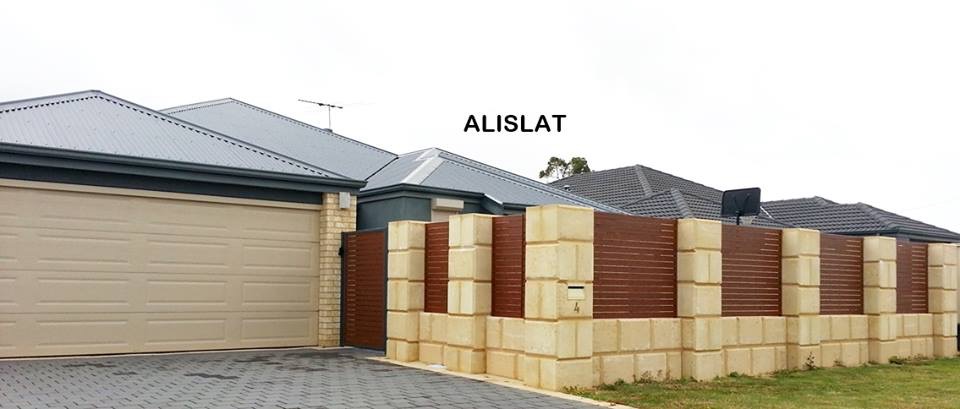
A fence can do much more than tell the neighbour where your lawn ends. Get the design right and it can sharpen your façade, hide the bins, create a private courtyard and give the whole property that polished “yes, someone thought about this” look. That explains why slat fencing has become such a natural match for contemporary Perth homes.
When I compare horizontal and vertical designs, I never treat orientation as a purely cosmetic choice. The direction of the slats changes how wide or tall your frontage feels, while the material, spacing, posts and finish affect privacy, maintenance and how comfortably the fence handles Perth conditions.
The best-looking option on Pinterest can become rather less glamorous after a few summers if you choose the wrong material or detailing. Perth Metro records average maximum temperatures above 31°C in January and February, while most rain falls during the cooler months, so outdoor materials face very different conditions across the year.
Before you fall for one particular look, I’d also talk through your block, privacy goals and material choices with an expert slat fence installer. A narrow townhouse frontage in Subiaco asks for something quite different from a broad coastal property or a backyard entertaining zone. Get those basics right first, and the horizontal-versus-vertical question becomes much easier.
Horizontal vs vertical slat fencing at a glance
Let’s get the obvious question out of the way: neither direction automatically wins.
I usually favour horizontal slat fencing when a homeowner wants a broad, sleek, architectural look. Long horizontal lines draw your eye sideways, which can visually stretch a compact frontage. Match them with charcoal aluminium, warm timber tones, rendered pillars or exposed brick and you get a very clean contemporary finish.
Vertical slats tell a different story. Their upright rhythm pulls your eye upwards, so I often use the look to give a low or wide façade more height and presence. The effect feels ordered and crisp without trying too hard.
Here’s how I’d compare them:
| Feature | Horizontal slats | Vertical slats |
| Visual effect | Makes an area feel wider | Makes a fence or façade feel taller |
| Style | Sleek, modern and architectural | Refined, rhythmic and contemporary |
| Privacy control | Excellent with carefully chosen gaps | Excellent with carefully chosen gaps |
| Sloping sites | Often needs stepping or careful alignment | Can follow changing levels more naturally in some layouts |
| Timber movement | Long boards need good support and fixing | Individual upright slats rely on well-built rails |
| Cleaning | Horizontal top edges may collect more dust | Upright lines offer fewer long horizontal ledges |
| Best fit | Wide façades, courtyards, modern renovations | Narrow frontages, feature screens, taller visual proportions |
| Overall winner | Best for visual width | Best for visual height |
One detail matters more than most people expect: gap size. I wouldn’t choose orientation alone when privacy or wind sits high on your wish list. Research on porous fences shows that porosity has a substantial influence on airflow and aerodynamic forces, which means the amount of open space in the fence can matter as much as the direction of the slats.
What Perth homes need from slat fencing
Perth gives fencing materials a proper workout. The city combines hot, dry summers with wetter winters, and coastal suburbs also need to think seriously about airborne salt. Bureau of Meteorology figures for Perth Metro put the long-term mean maximum at 31.4°C in January and 31.7°C in February, while average rainfall rises sharply through winter.
That climate pushes me towards powder-coated aluminium slat fencing when a client wants minimal maintenance. Aluminium itself avoids the rust problems associated with unprotected ferrous metal, although the coating still needs care.
Dulux recommends regular washing of powder-coated surfaces and more frequent cleaning where coastal salt or industrial pollutants build up. In harsher coastal environments, its maintenance guidance calls for shorter cleaning intervals than it recommends for normal urban locations.
Timber brings something aluminium cannot quite fake: natural warmth. I love it beside stone, white render and lush landscaping. However, timber demands a more committed relationship. WoodSolutions notes that exterior timber changes under sun and rain and that UV exposure and moisture cycling can lead to colour loss, roughness and cracking. Appropriate species selection, treatment, finishes and maintenance help extend service life.
Then we have the less glamorous bit: rules. Western Australia’s government guidance on dividing fences explains how the Dividing Fences Act works alongside local-government requirements.
Local councils commonly control matters such as fence height and encroachments, while agreements between neighbours can also affect dividing-fence arrangements. I’d check your own council requirements before ordering materials, especially for a front fence, unusual height, corner property or boundary shared with a neighbour.
That point matters because Perth councils can apply requirements around street fencing, sightlines and visual permeability. For example, local planning material in the Perth metropolitan area defines visual permeability partly through the proportion and size of openings in a fence. In other words, shrinking every gap for maximum privacy may clash with planning requirements in some locations.
Horizontal slat fencing: where it shines
Horizontal slat fencing has swagger. Not loud swagger — more tailored-jacket swagger. It looks especially sharp with newer homes that feature low rooflines, long windows, broad garage doors and strong rectangular forms.
I reach for horizontal slats when I want to make a tight outdoor space feel less boxed in. Run those lines across a courtyard and your eye naturally travels along them. That visual trick works beautifully on compact Perth blocks where every perceived centimetre counts.
You can also play with spacing. Narrow gaps create stronger screening, while wider gaps make the fence feel lighter and more open. For a front boundary, I’d balance privacy against street connection and council requirements rather than turning the property into Fort Knox with a letterbox. Local planning controls may require visual permeability in front-setback areas, so I always treat slat spacing as a planning decision as well as a style decision.
Horizontal timber needs thoughtful construction. Long pieces require sound support, suitable timber, good exterior detailing and proper finishes. WoodSolutions recommends choosing fencing timber for durability and matching posts and other components to their exposure conditions; it also notes that maintenance and appropriate finishes can improve service life.
For low-fuss slat fencing, aluminium makes horizontal designs particularly appealing. You get straight lines, consistent gaps and plenty of powder-coat colour options without signing yourself up for regular staining.
I’d choose horizontal slats when you want:
- a wider-looking frontage or courtyard;
- a strong architectural line;
- excellent privacy control through tailored spacing;
- a natural match with modern and mid-century-inspired homes.
One caution: don’t automatically copy a horizontal design around a swimming pool. Horizontal features can create climbable elements, and pool barriers in Western Australia must meet specific safety requirements. Local-government guidance notes non-climbable zones and other dimensional requirements for pool barriers.
Vertical slat fencing: where it wins
Vertical slat fencing has quietly moved from “traditional paling fence territory” into seriously stylish design. Use slim aluminium battens, deep earthy colours or natural timber and the result feels more like architectural screening than an old backyard boundary.
I particularly like vertical lines on homes with a low roof or wide frontage because they create contrast. Instead of echoing every horizontal line already on the building, the fence introduces height and rhythm.
Vertical layouts also suit feature screens around entrances, bin stores, patios and landscaped courtyards. Repeat narrow battens beside tall grasses or slender trees and you get a layered look that feels deliberate rather than decorated.
On uneven ground, vertical slats can also give an installer useful flexibility. Rather than forcing one long horizontal line across changing levels, the design can adjust individual slat lengths or step supporting sections to suit the site. The final approach still depends on the fence system, posts, retaining and ground levels, so I’d treat this as a design advantage rather than a universal rule.
Maintenance comes back to material. Vertical timber still faces sun, rain and moisture movement, so orientation does not magically turn timber into a zero-care product. WoodSolutions stresses that exterior timber needs suitable durability, finishing and detailing regardless of how you arrange it.
For aluminium, I’d pay particular attention to coating quality near the coast. Powder-coating manufacturers specifically identify salt deposits, UV exposure, wind-blown debris and environmental conditions as factors that influence coating life. Regular cleaning helps remove those deposits before they become a long-term problem.
I’d favour vertical slats when you want:
- more visual height;
- a crisp architectural screen;
- a design that breaks up an overly wide façade;
- contemporary style without following the more familiar horizontal-fence formula.
How I’d choose the right slat fence for your home
I’d start with the house, not the fence catalogue.
Stand across the street and look at the strongest lines in your façade. Does your house already stretch horizontally through a wide roof, garage and windows? Horizontal slat fencing can reinforce that streamlined look, while vertical battens can provide useful contrast. If your frontage feels narrow or tall, reverse the logic and see which direction restores balance.
Then decide how much privacy you genuinely need. A front fence rarely needs to hide every square centimetre of your property. Sometimes a little openness makes landscaping, lighting and architecture work much harder. For a rear courtyard beside a busy neighbour, however, tighter screening may make perfect sense.
Next, choose your material according to your appetite for upkeep. I’d summarise the choice like this:
Choose powder-coated aluminium when you want straight lines, colour consistency and relatively simple maintenance. Wash it regularly, particularly in salty coastal locations. Manufacturer guidance recommends more frequent cleaning as environmental corrosivity increases.
Choose timber when warmth and natural texture matter more to you than having the lowest possible maintenance. Pick a suitable species or treated product and accept that exterior finishes need attention over time. WoodSolutions recommends durable species, suitable treatments and regular maintenance for long-lasting fencing applications.
Finally, look beyond orientation. Post spacing, slat dimensions, gaps, footing design, gates, retaining walls, ground levels and hardware all influence how the finished fence performs. Wind research also shows why I would never judge wind behaviour simply by saying “horizontal handles wind better” or “vertical lets more breeze through”. Porosity, geometry, wind direction and overall fence design all influence airflow and loading.
That gives us the real answer: horizontal versus vertical matters most visually; good design determines performance.
Conclusion
So, which design wins?
For a sleek Perth renovation, wide courtyard or façade that needs extra visual breadth, I’d lean towards horizontal slat fencing. It feels sharp, calm and unmistakably contemporary.
For a home that needs more visual height, a distinctive front screen or something a little less expected, I’d give vertical slats serious consideration. They bring rhythm and sophistication without shouting for attention.
Material matters just as much. Aluminium makes sense when you value easier upkeep, particularly if you select a coating system that suits your location and maintain it properly. Timber rewards a little more love with warmth and character that manufactured finishes struggle to match.
Exterior timber specialists stress the importance of durability, suitable treatment and ongoing finishing, while powder-coating suppliers likewise recommend regular cleaning to protect coated metal outdoors.
Most importantly, I wouldn’t pick a fence from a photo alone. Check your council requirements, study the proportions of your home, work out how much privacy you actually need and choose spacing that suits both the street and your lifestyle. The right slat fencing should look like part of the architecture — not something the house reluctantly agreed to wear.
Take a photo of your frontage, note your preferred material, colour and privacy level, then speak with an experienced installer about a design that suits your block, Perth conditions and local requirements. A little planning now can save you from an expensive case of “looked better in the brochure” later.
Frequently asked questions
Is horizontal or vertical slat fencing better for privacy?
I wouldn’t rank one orientation above the other for privacy. Slat fencing privacy depends mainly on slat width, gap size, viewing angle and overall fence height. You can create strong screening with either design. For front fences, though, check local planning requirements before reducing the gaps because some Perth-area planning controls require a certain level of visual permeability.
Does horizontal slat fencing make a small yard look bigger?
I often find that it does visually. Long horizontal lines lead your eye sideways, so a narrow courtyard or compact frontage can feel broader. I’d combine horizontal slats with simple landscaping and restrained colours rather than adding too many competing patterns.
Which material works best for slat fencing in Perth?
For low-maintenance slat fencing, I generally favour powder-coated aluminium, particularly when homeowners want consistent colour and clean lines. Near the coast, I’d follow the coating supplier’s cleaning schedule because salt and other contaminants can build up on the surface. Timber gives you richer natural character, but it needs appropriate durability, treatment, finishing and maintenance outdoors.
Can I install horizontal or vertical slats on a Perth front boundary without council approval?
I would never assume that you can. Requirements vary by local government and may depend on height, location, visual permeability, sightlines, heritage controls and the specific property. Western Australian government guidance confirms that local councils commonly set fence-height restrictions and encroachment rules, so check the rules for your property before you order the fence.