
Every parent’s nightmare: a child at a pool gate with no one watching. Royal Life Saving reminds us that “child drowning in backyard swimming pools often results from a lapse in supervision, meaning the pool fence and gate is critical”. In Western Australia, laws back this up – any private pool over 30 cm deep must have a compliant safety barrier. In short: a sturdy pool area fence isn’t just a nice-to-have design feature in your Perth home; it’s a legal requirement and a lifesaver. Here’s how to make sure yours is done right, from planning to installation and beyond.
Why a Pool Area Fence is Non-Negotiable
Kids are excellent climbers and explorers, which makes an unsecured pool a serious hazard. Every year children drown in household pools, and experts say a proper fence is the critical second line of defense. In fact, the WA Government warns that all pools and spas holding more than 30 cm of water “must have safety barriers that restrict access by young children”.
Think of your pool fence like a seatbelt or guardrail – it won’t stop every accident, but it dramatically reduces the risk. As Royal Life Saving’s CEO Justin Scarr puts it, mandatory fencing has “saved thousands of toddlers’ lives” in Australia. In other words, installing a compliant fence is simply smart parenting (and smart property management) in Perth.
WA Pool Fencing Regulations and Requirements
Western Australia has strict rules for pool barriers. A compliant pool area fence must be at least 1.2 m tall (2.4 m if it’s made of climbable mesh/perforated material) and have no gaps bigger than 10 cm at the bottom or between pickets. Gates are especially important: they must swing away from the pool, be self-closing and self-latching (so a toddler can’t push them open). Homeowners are legally obliged to keep barriers in good condition at all times. Local councils typically inspect pool fences every four years, but you should do quick checks more often (look for a gate latch that always shuts, no rust, no debris under the fence, etc.).
Before you even build, plan carefully. The WA Building Commission advises:
Plan location and visibility: Place the pool (and fence) where it’s visible from the house, so you can keep an eye on swimmers.
Clear the area: Don’t leave playground equipment, garden chairs or trees within 1.2 m of the fence – these become “stepping stones” kids could use to climb over.
Coordinate boundary fences: If your pool fence abuts a property boundary, make sure it meets regulations or arrange a compliant separate barrier.
Check permits: Since June 2024 most WA pool fences don’t require a council building permit, but exceptions apply (e.g. very tall brick walls or fences on a drop-off). It’s wise to confirm any rules with your local council first.
Thinking through these details before construction will save headaches. As one guide notes, organizing even a temporary fence early on “will help avoid delays and compliance problems”. Once the pool is built, the fence installer (typically a licensed contractor) should provide a compliance certificate. You’ll need to lodge this with council and book a safety inspection to officially approve your new barrier.
Choosing the Right Pool Area Fence Material
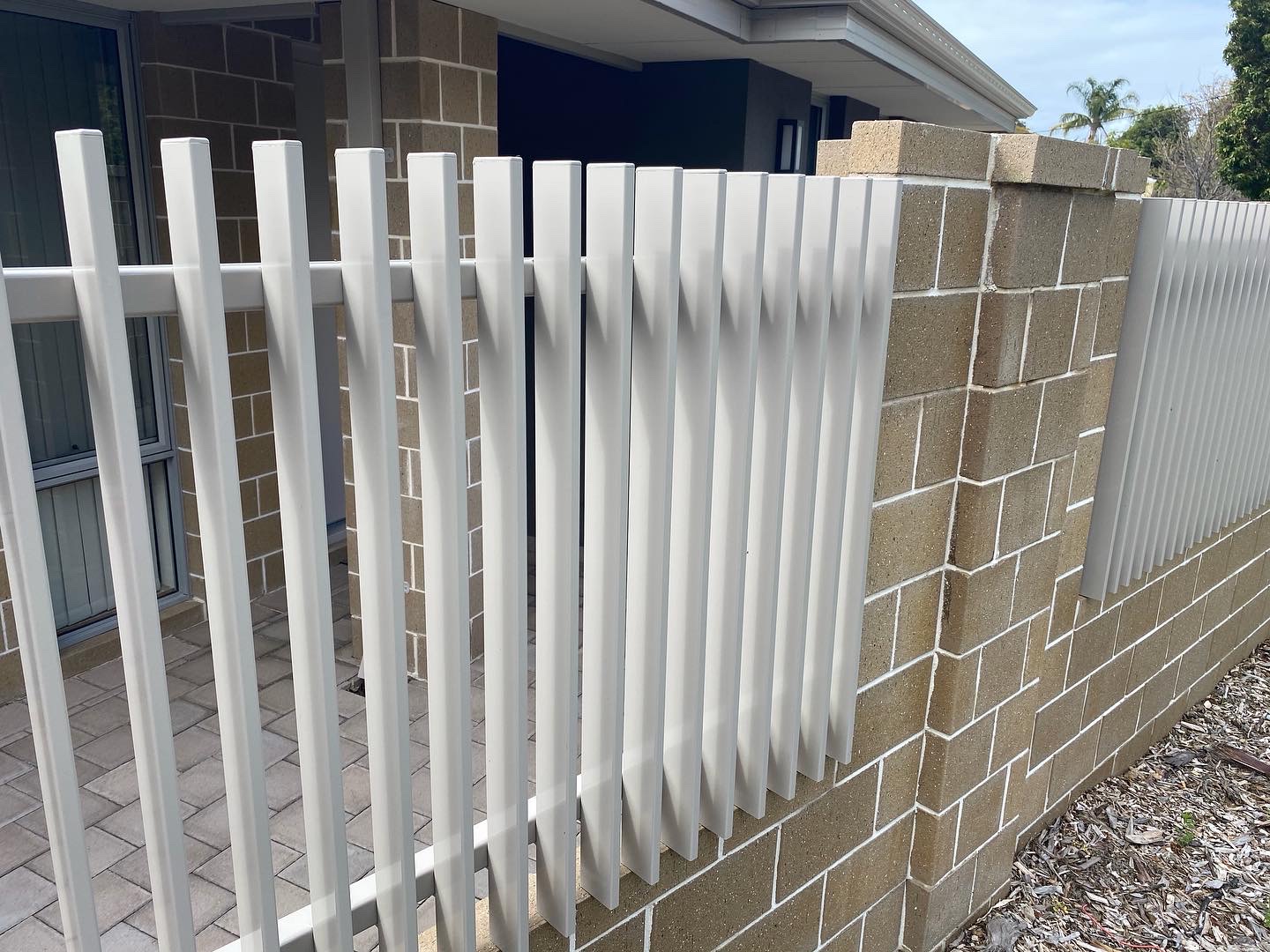
A pool area fence can be made of many materials. Your choice affects style, maintenance and (to some extent) cost. Here’s a quick comparison:
|
Material/Style |
Advantages | Disadvantages |
|
Glass (frameless/semi) |
Sleek, modern look and unobstructed view; durable tempered glass; minimal maintenance for long life. | Premium price; requires keeping panels clean; must use quality spigots/gates for safety. |
| Aluminium/Steel Picket | Strong, rust-resistant (great for Perth’s climate); cost-effective; can be powder-coated in many colors; works on slopes (raked panels). |
Blocks more of the view; may look more traditional; small debris won’t fall through. |
| Perforated Metal or Mesh | Lightweight and often DIY-friendly; decorative options (e.g. Laser cut panels); generally lower cost. |
Not as robust as solid fences; large perforations are not allowed (limit 10 cm gaps). Must meet AS1926.1. |
| Timber or Composite | Can blend with landscaping; sturdy if treated. |
Prone to rot or damage in wet areas; requires regular maintenance; typically not allowed unless approved by a certifier. |
Each option can meet safety standards if properly designed. For example, frameless glass panels are popular in coastal Perth homes because they provide a resort-like openness and “clean lines”. A well-installed aluminium picket fence can be just as safe and usually costs less than glass. No matter what you pick, ensure it is tested or certified to Australian Standard AS 1926.1. The latest 2026 revision of this standard adds clarity on things like non-climbable zones and gate hardware.
No matter what you pick, ensure it is tested or certified to Australian Standard AS 1926.1. For full details on WA pool safety barrier requirements, refer to the official WA Government guidelines.
The Pool Area Fence Installation Process
Installing a pool fence properly is a step-by-step process. Here’s what typically happens:
Site Assessment & Measure: The installer surveys your yard, measures the pool perimeter and notes any slopes or obstacles. Everything from the gate swing direction to ground gradients is planned. (Remember: gates must open away from the pool.)
Material Selection: Based on your preference and budget, you finalize materials (glass panels, aluminium pickets, etc.). The installer should advise on compliance: for example, ensuring a 900 mm non-climbable zone (free of ledges or objects) and correct fence/gate height.
Permit and Approvals: If needed, the installer helps with permits (though most fences now skip permits, some tall/brick fences still need one). They will also check if any boundary/dividing fence issues must be resolved.
Preparation: The crew marks out the fence line, digs holes, and installs any substructure. Gates are set on hinges oriented outward. At this stage, temporary fencing or netting might be used to keep the site secure.
Assembly: Panels or palings are fixed to posts. Glass fence systems use sturdy stainless steel spigots (fasteners) to hold panels – often grade 2205 duplex steel for strength. Aluminium rails and pickets are welded or bolted. Self-closing, self-latching gate hardware is installed and rigorously tested.
Final Checks: The installer ensures the fence meets all technical requirements: no gaps >10 cm at bottom/side, gate swings/locks properly, etc. A responsible installer will supply you with a compliance certificate (the BA7 “Notice of Completion” form).
Certification: After installation, either you or the installer must lodge the BA7 with your local council. The council will then inspect the fence (usually within 30 days of notice). Don’t skip this step: an official inspection makes your pool legally compliant and may be required before you can legally fill or use the pool.
In short: hire professionals who know the WA rules. A qualified pool area fence installer will guarantee your barrier is compliant and can show you documentation. If an installer can’t prove their fence meets the code, you could end up with a non-compliant fence – and hefty fines. It’s worth being picky: choose someone with proper building credentials and good reviews.
For example, frameless glass pool fences use toughened panels to meet safety standards. Notice the black spigots anchoring the glass – they’re usually Grade 2205 stainless steel for maximum strength. Good installers also ensure gates are correctly installed (always swinging out) and that the fence stays within the 1.2 m height rule.
Pool Area Fence Maintenance and Inspection
Once installed, your job isn’t quite over. The law expects pool owners to keep barriers in working order at all times. That means:
Regular checks: At least every few months, walk the fence and try the gate latch. Make sure it self-closes and locks from any angle. Look under the fence for accumulated debris or soil – nothing should let water fill in gaps. If you find loose parts or corrosion (especially in metal fences near the coast), fix them promptly.
Keep it clear: Move chairs, bikes or pots away from the fence. A common hazard is kids climbing using nearby objects – remember to respect the 900 mm non-climbable zone.
Professional inspection: Councils usually have a rolling program to inspect pool fences every 3–4 years. You may be contacted by inspectors who can charge a small fee for this. Be cooperative – you’ll get peace of mind (and a certified compliance) in return.
If ever you want to renovate or alter your fence, check first whether a new permit or inspection is needed. Even adding a fresh coat of paint can sometimes require approval if it involves changing the fence structure. When in doubt, consult the WA Government’s pool safety advice or a certified installer.
Conclusion
A well-designed pool area fence is more than just a legal requirement in Perth—it’s a critical safety feature that protects your family and gives you peace of mind. From understanding WA regulations to choosing the right materials and ensuring proper installation, every step plays a role in creating a secure pool environment. By investing in a compliant, durable fence and maintaining it regularly, you not only meet legal standards but also significantly reduce the risk of accidents. In the long run, a reliable pool area fence is an essential part of responsible homeownership and safe outdoor living.
Ready to protect your pool area fence? Start by contacting a licensed pool fence installer in Perth for a quote. They’ll walk you through the process, from choosing materials to passing inspections. Your peace of mind (and your family’s safety) will be well worth it.
FAQ
1. What is the minimum height required for a Pool Area Fence in Perth?
Under WA laws, any Pool Area Fence must be at least 1.2 m high. If the fence has any mesh or perforations large enough to climb, the requirement jumps to 2.4 m to account for climb risk. Gaps at the bottom or between panels must not exceed 10 cm.
2. Do I need a building permit for pool fence installation in Perth
Usually no. Since June 2024 most pool fences in WA do not require a building permit. Permits are only needed for very tall or brick walls (e.g., >0.75 m brick or >1.8 m other material) or if the fence also serves as a high balustrade. Check the latest DMIRS fact sheet to be sure.
3. How often should my Pool Area Fence be inspected or maintained?
You should routinely check your pool fence yourself (monthly is wise) to ensure the gate latch and hinges are working and no damage or vegetation is compromising it. Legally, owners must keep the barrier compliant at all times. Local councils in WA will carry out formal inspections at least every four years, but frequent home inspections and maintenance are strongly advised.