Imagine sipping your morning coffee on your Perth deck, only to feel on display – that’s a cue for decorative privacy fencing. It’s not just a plain wall; it’s the stylish shield for your outdoor room. Think of it as sunglasses for your backyard – it shields you from prying eyes while adding serious style points.
In fast-paced Perth suburbs, yards are cozy and homes are close together, so a smart fence gives you comfort and curb-appeal. As one landscaping expert puts it, a well-designed fence “protect[s] privacy, add[s] security, and boost[s] the value of your property”. In short, the right decorative privacy fencing turns a “plain wooden wall” into a conversation piece.
Why Privacy Matters in Perth
Perth’s outdoor lifestyle means you want to enjoy your yard without feeling exposed. But with hot sun (UV index around 12) and cooling sea breezes, you also need protection. A solid or decorative fence provides shade and a wind buffer, making your backyard cooler and cozier. It keeps kids and pets safely contained and even dampens street noise.
Whether you’re hosting a BBQ or just lounging with a book, a decorative privacy fence gives you a relaxed “sanctuary” feeling in the open Aussie sky. It defines your property clearly and creates comfy outdoor “rooms” (BBQ spot, pool area, etc.) without losing style.
Perth homes today favour styles like modern-coastal, minimalist or industrial. A basic Colorbond or paling fence often feels underdressed. Instead, designers use decorative fences (slatted screens, patterned panels, mixed materials) to complement the home’s look.
The fence sets the mood as you approach the house. For example, a horizontal timber slat fence with warm stain brings a modern vibe, while a laser-cut metal panel adds a crisp artistic touch. These choices aren’t just vanity – they balance privacy with airflow so your yard doesn’t feel boxed in.
Decorative privacy fencing blends security with design flair. At its core, it means using stylish materials and patterns on your privacy fence. Unlike a plain corrugated panel, these fences might include laser-cut metal screens (think leaf or geometric cutouts), wood slat sections (often horizontal boards or lattice), mixed-material walls (brick or stone base with wood/metal above), or even living walls with vines growing on trellises.
A decorative fence still hides the yard from view, but does so with premium touches (powder-coated aluminium, hardwood, composite timbers) that make the fence a focal point, not just a wall. In effect, decorative privacy fencing “combines security with visual appeal” by using materials like aluminium or timber in creative ways. You get the best of both worlds: a secluded yard and something beautiful to look at.
- Laser-cut metal panels: Steel or aluminium sheets with patterns (waves, leaves) that cast pretty shadows.
- Wood slat screens: Horizontal or vertical timber planks (sometimes mixed with metal) that filter light through narrow gaps.
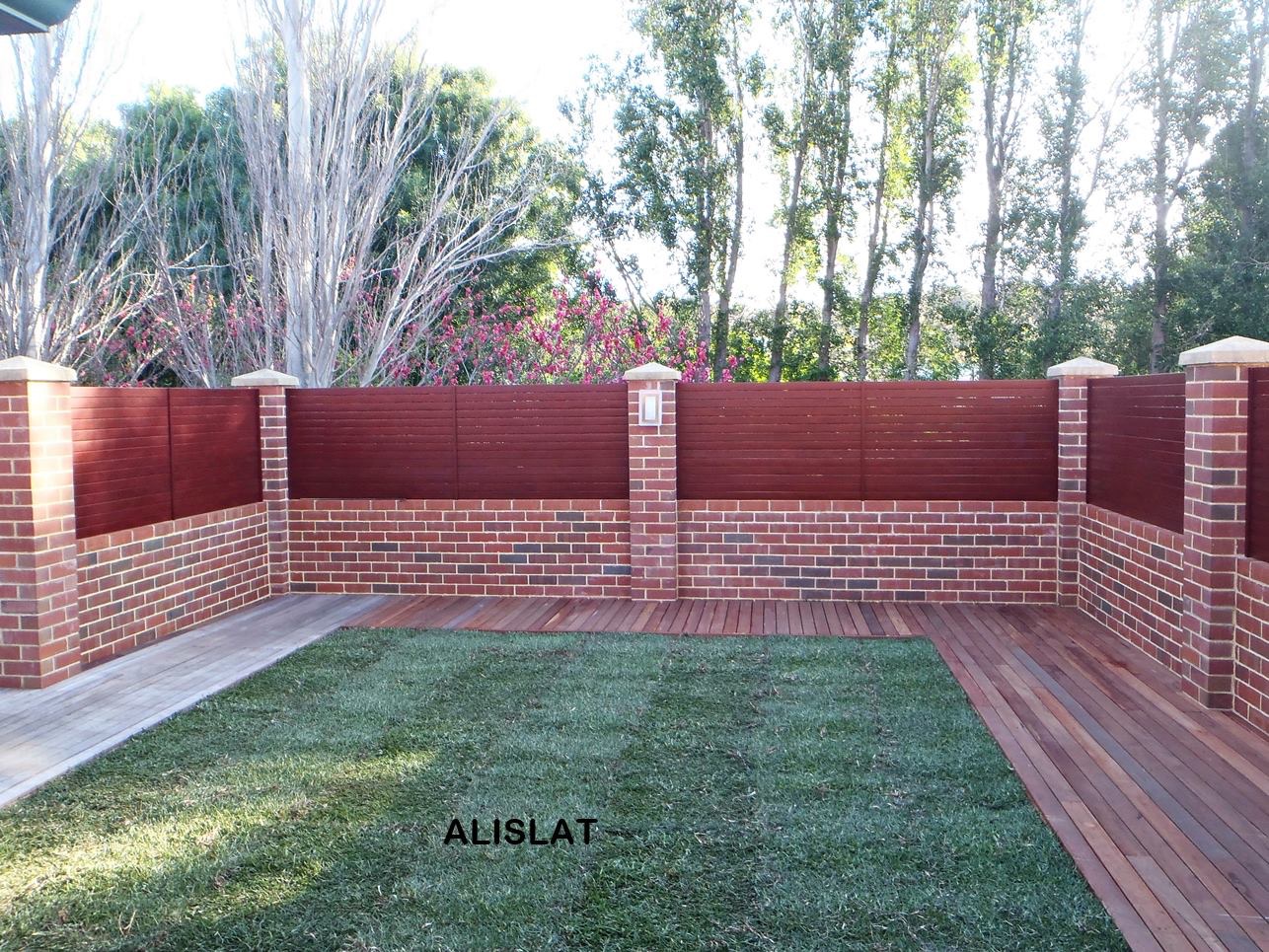
- Mixed-material designs: A solid stone or brick base topped with timber or metal battens – strong, yet textured.
- Green fences: Frames with built-in planters or trellis for climbing vines, creating a living privacy wall.
Each style is as much about personality as privacy. Decorative fences can incorporate lighting or plants to become an outdoor feature wall, so your fence feels like part of the garden design. They often use high-quality finishes (e.g. powder-coated colourbond, tropical hardwood) and tight craftsmanship so lines align and seams stay clean.
Popular Decorative Fence Materials
Choosing the best decorative fence type really depends on what matters to you – climate durability, maintenance, look and cost. Here’s a quick rundown of common materials and styles for Perth homes: Timber (Hardwood or Treated Pine): Warm, natural aesthetic – great for modern or heritage looks. Horizontal hardwood slats are trendy and vibe-friendly. Pros: Rich look, versatile (stain any color), ages with character. Cons: High maintenance in Perth’s sun. Untreated or poor sealant leads to fading, cracking and warping.
You’ll need to reseal or oil every few years to protect it. Timber is vulnerable to termites and moisture, so expect regular care. A full wood fence may start at 10–15 years lifespan if well-kept.
Colorbond® Steel (Corrugated or Slats): Iconic in Australia, Colorbond fencing is strong and weatherproof. Pros: Very durable, immune to termites, non-combustible (good for bushfire zones). Holds shape and paint well, even under UV, especially if powder-coated. Offers a crisp modern look and comes in many colors. Cons: Can dent if struck, and large solid panels can catch wind like a sail.
Plain vertical panels block light completely; decorative slatted Colorbond (with inserts or gaps) is better for airflow. Maintenance is low (just wash off salt and touch up scratches). Typical Colorbond fence lasts 15–25 years (shorter near salty coasts). In Perth’s climate, it’s often the “best-value boundary fence” due to durability.
Aluminium (Slats or Panels): Lightweight and rust-free, often powder-coated. Pros: Immune to salt corrosion, termite-proof, long-lasting (20+ years). Allows custom designs: you can get sleek slatted or perforated screens. It doesn’t heat up like steel and is easier to install.
Cons: Generally pricier than timber, and scratches can be more visible on darker colors. Still, only occasional washing is needed to keep it fresh. Aluminium decorative panels give a high-end look without the high upkeep. Superior in coastal Perth suburbs due to salt resistance.
Composite/PVC (e.g. Vinyl, Enviroslat): Made from polymers or recycled wood/plastic mix. Pros: Very low maintenance – no painting or sealing, just an occasional rinse. Some have warranties 20–30 years. Termite immune and won’t rust. Comes in wood-look finishes or bright colors.
Cons: Feels less premium than real wood. Can crack if hit hard and is not allowed in fire-prone zones (non-combustible needed). Design options are somewhat limited to slats or pickets. Best for easy upkeep and white picket (or Hamptons) style screens.
Brick, Stone or Rendered Walls: These classic fences anchor a design with texture. Pros: Ultra-durable (50+ years), noise-blocking and fire-safe. Masonry adds warmth and character (especially with feature brickwork). Cons: Expensive materials and labor.
Heavy walls often need engineering and building approval (councils like Canning require permits for brick fences over 0.75m). A partial brick base with a decorative top section (timber or metal slats) is a common compromise for style and approval.
Mixed/Feature Designs: Combining materials is huge trend. For example, a short rendered wall with tall timber battens on top, or a gabion base with metal slats. These fences let you match the home’s palette and break up long spans. Even a classic wrought-iron style can be given privacy by adding a timber screen behind it. The key is picking materials that age well together in Perth’s sun and salt.
Table: Material Comparison
| Material | Durability | Maintenance Needs | Style & Notes |
| Timber | ~10–20 yrs (softwood); up to 50 yrs (hardwoods) | High – reseal/stain every 2–5 yrs, check for rot/termites | Warm, natural look; suited to rustic or contemporary styles. Wood warps if neglected. |
| Colorbond | ~15–25 yrs (even longer inland) | Low – wash off salt spray, touch up chips | Sleek modern boundary; termite-proof and bushfire safe. Solid panels block noise. |
| Aluminium | ~20–30+ yrs (non-corrosive) | Very low – occasional wash | Lightweight, termite-proof; available in many colours. Ideal for crisp, high-end screens. |
| Composite/PVC | ~20–30+ yrs (30yr warranty options) | Very low – wash as needed | Weather-resistant; comes in wood-look or bright colours. Resists salt and rot; not fire-rated. |
| Brick/Stone | 50+ yrs | Low – mostly cleaning/joint maintenance | Timeless and strong; excellent privacy & noise barrier. Very expensive and heavy. |
Perth-Specific Considerations
When picking your fence, remember Perth’s rules and weather. Most councils (and the WA Residential Design Codes) allow a side or rear boundary fence up to 1.8m high without special approval. If you want taller (say 2m), you’ll likely need council sign-off. However, front fences are more restricted to maintain street sightlines.
Typically, a solid front fence must stay around 1.2m in height; above that, it usually must be “visually permeable” (with gaps or slats). For example, the City of Perth local law says no fence over 1.2m in front setback without consent. In practice, many Perth councils let you go to ~1.8m on front if the top half is open slats.
Always check your local council’s fencing policy nd the WA Government guidance on dividing fences. Councils vary (some hillside or heritage areas have extra rules). Councils vary (some hillside or heritage areas have extra rules). As a rule of thumb: boundary fences up to 1.8m and front fences up to 1.2m (solid) usually don’t need a permit.
Brick, stone or glass walls often trigger approvals (City of Canning, for example, requires approval for brick over 0.75m). If your fence doubles as a pool barrier, remember pool fence laws too (self-closing gates, 1.2m high, no footholds).
On the flip side, Perth’s climate rewards durability. Coastal Perth needs corrosion-resistant materials (powder-coated steel or aluminium). Bushfire-prone hillsides (Kalamunda, Roleystone) call for non-combustible fences (steel or masonry) meeting AS3959 fire-rating.
A fence that “blocks the cooling Fremantle Doctor” entirely can overheat your yard, so many designers use slatted screens or lower sections near patios to let the sea breeze through. In short, match the material to your site: in salty suburbs, go metal; in hills, go non-combustible; otherwise go with your style.
Style and Installation Tips
When designing, less is often more. Beware of over-the-top fences that try to do everything – they end up feeling cluttered or “bunker”-like. Think about scale: a very busy pattern on a small yard can feel overwhelming, whereas too few gaps might defeat the privacy goal. Slatted fences are fantastic, but spacing is critical.
If the gaps are too wide, the “privacy” part fails; too narrow, and you lose airflow. The best decorative privacy fencing finds a middle ground: it feels light and airy, yet still hides what you want hidden. Often that means horizontal slats about 10–20mm apart, or a mixed pattern with planter boxes or trellis breaks.
Installers matter a lot. Even a pricey custom fence looks bad if it’s lopsided. Make sure panels are level and posts are solid. As one Perth fence pro warns, fixings must be tight or “little problems have a habit of snowballing into big repairs. In other words, invest in a skilled installer – it’s worth it to avoid a “squinting, swearing redo” later.
Cost and Maintenance
Let’s be candid: decorative privacy fences usually cost more upfront. Custom screens and mix-and-match materials push prices up. A basic timber or Colorbond panel might run a few hundred dollars, but a custom laser-cut panel can be ~$800+ each. Labor is higher too; installing intricate panels or aligning dozens of slats takes time. In fact, many homeowners find a fancy fence can cost about double a plain fence.
Budgeting helps. Choose quality materials you can live with. Cheaper wood saves money now but will need sanding and staining every few years. “Cheap flash” rarely ages well – better to splurge a bit on an enduring look and low-maintenance finish.
Remember, unlike a renovation that you might enjoy later, a new fence changes your home immediately – boosting curb appeal and daily comfort. You’ll enjoy more privacy and maybe even a higher resale value (like a renovated deck adds value, so can a great fence). Just balance style with function: don’t pick a super-intricate laser pattern if you actually need solid screening for peace of mind.
Maintenance wise, Perth’s sun and salt air are relentless. Even Colorbond will attract salt spray, and timber will fade under UV. The good news: metal fences need very little. A quick spray with a hose every few months keeps salt and dust off.
For timber sections, though, plan on annual upkeep: a coat of oil, stain or sealant to fend off grey weathering. Regularly check all fixings and screws, especially after storms, and tighten anything that’s come loose.
Trim back foliage so vines and branches aren’t pressing dampness onto wood panels. A little care goes a long way – catching a tiny rot spot early, for example, means you swap one board instead of a whole fence later.
Conclusion and Call to Action
Decorative privacy fencing is your chance to get privacy with pizzazz. It hides your yard but also defines it – making it feel like an outdoor living room rather than leftover space. The best design will suit your house style, stand up to Perth’s climate, and fit your maintenance comfort level. Whether you dream of a dark steel screen, rich hardwood slats, a classic brick wall, or even a green vine-covered fence, Perth has options.
Investing in quality materials and a pro installer pays off. A beautiful, well-built fence doesn’t just screen you from neighbours – it elevates your home’s look and makes you enjoy the yard more every day. Picture stepping into your backyard and feeling relaxed, knowing your space is your own. That’s the power of a great fence.
Ready to upgrade your outdoor space? Get in touch with a reputable Perth fencing specialist to discuss decorative privacy fencing that suits your home, style and budget. A well-designed fence can add privacy, security and serious kerb appeal. Reach out today and start creating the outdoor sanctuary you’ve been dreaming about.
FAQs
What is decorative privacy fencing?
Decorative privacy fencing combines security with visual flair. It uses materials like aluminium, timber or steel in creative ways (laser-cut panels, slatted screens, mixed materials) to block views and boost curb appeal.
Is decorative privacy fencing suitable for Perth weather?
Absolutely – if you pick the right materials. Powder-coated aluminium, Colorbond steel or quality composites are designed for Perth’s harsh sun and salty air. These materials won’t rust or warp easily, so you won’t be repainting every season.
How much does privacy screen fencing cost in Perth?
It varies. Basic privacy panels might be a couple hundred dollars each, but custom decorative screens can easily be ~$800 or more per panel (before install). Decorative fences often cost about double a plain fence, due to custom designs and labor.
Do I need council approval for a new fence in Perth?
Usually not for a standard boundary fence under ~1.8m. However, solid front fences over about 1.2m typically require council consent to ensure visibility. If you’re using brick, masonry or building beyond these heights, check your local council rules first.