Ever stared down a steep driveway and wondered how on earth you’ll fit a gate? Trust me, we’ve all been there. Slopes add a fun twist to the gate game. A gentle hill might just need a tweak here and there, but a sharp incline calls for clever solutions.
In this guide, we’ll chat about the gate types that tackle slopes head-on – from classic swing and sliding setups to more unusual tricks (ever heard of a gate that lifts up?).
We’ll also cover materials, costs, and sneaky maintenance tips, all with a laid-back Aussie vibe. By the end, you’ll know exactly what gate choice will keep you grinning at the bottom of your driveway – not grimacing at a gate that drags!
Swing vs. Sliding vs. Others: Comparing Gate Types
Swing Gates:
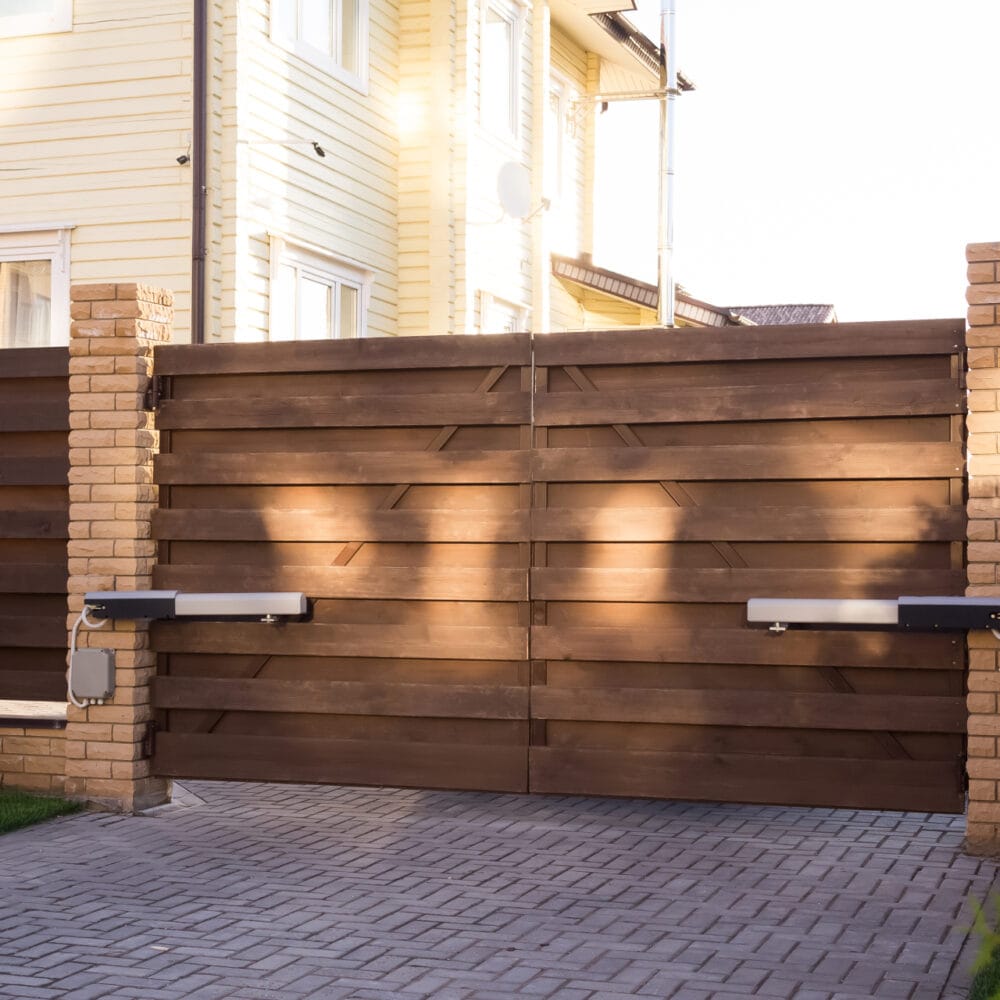
The old faithful of front entrances. Swing gates open like a door, pivoting on hinges. They look ace – think decorative wrought iron or wood – and work beautifully on flat driveways. But on a slope? Uh-oh. A standard swing gate will drag or jam if the driveway rises or falls under its path.
You might spot a gate dragging like a lazy dog on a leash. To make a swing gate play nicely with a sloping driveway, builders use tricks: raked frames (angled frames that follow the slope), rising hinges (they lift the gate as it swings), or split leaves (two shorter gates instead of one big one). These solve some problems, but not all.
A really steep hill or a cross-slope (one side higher than the other) often still bakes the gate into the ground. As our mate from a Melbourne gate shop explains, even a properly designed swing gate on a slope can be a gamble – the steeper the incline, the more custom engineering you’ll need.
Sliding Gates:
Think of these as the couch movers of gates – they slide sideways out of the way. For sloped driveways, sliding gates are usually the front-runners. Why? They roll along a level track or cantilever, so the ground angle doesn’t interfere with the gate’s path.
If your driveway climbs, a sliding gate can still glide horizontally. There are two main sliding styles: Tracked sliding gates (with a wheel track on the ground) and cantilever sliding gates (no ground track – it hangs and rolls above, like a heavy-duty garage door).
A tracked slider needs a perfectly level, debris-free track; that often means concrete footing and careful drainage. A cantilever slider avoids ground hazards and works great on uneven ground or gravel, but it needs a solid wall or posts for support and usually costs a bit more.
In Australia’s climate, these aluminium or steel sliders resist coastal rust well. Just remember: a sliding gate needs fence-line space to slide open (basically the gate’s own width). And it needs motor power to drag it up the incline if it’s automated.
Bi-Fold / Telescopic / Pivot Gates:
When swing or standard sliders aren’t possible, get creative. Bi-fold gates split in the middle and fold back, like a concertina. They work well in tight spots and even on some slopes (since folding halves usually swing parallel).
Telescopic (Retractable) gates overlap themselves as they slide – picture a sliding gate that collapses into two sections. They save space if there isn’t room for a full slide.
Neither is super common, but they do the job. Vertical Pivot (Lift-up) Gates are a real wildcard: the gate swings up on a hinge at the bottom, standing upright like a garage door. This avoids sloped-ground problems entirely, but they’re pricey and rare for homes.
For most Perth driveways, a well-built slide or carefully engineered swing will do the trick. (And if your driveway is really bizarre, you might mix approaches – like a small sliding gate alongside a bigger swing gate, or vice versa.)
Picking the Right Material and Style
Once you’ve settled on the type, choose your material wisely. In Perth’s sun and sea breeze, aluminium is a star. It’s lightweight, won’t rust, and can be powder-coated in any colour. Timber gates look warm and classic, but wood hates our weather – it warps, rots and needs annual oiling or painting.
A neat trick is wood-look aluminium: you get the timber vibe without the fuss. Wrought iron or steel gates (cast or tubular) look stunning but are heavier and pricier. They need galvanising or paint to fight rust.
Mesh or slat gates (like those from Alislat’s range) are also popular: they feel modern, let air through (which is great on hot days), and aluminium slats especially can match fencing for a seamless look.
No matter what, go for powder-coating instead of just paint – it lasts far longer in Aussie sun. And think about accents: cut-out designs, geometric patterns, or even timber inserts can make your gate pop. Here’s a quick table of pros and cons by material:
| Material | Pros | Cons |
|---|---|---|
| Aluminium | Rust-proof, lightweight, low-maintenance, modern look. | Less “heavy-duty” feel (but strong enough). |
| Wrought Iron | Traditional, very strong, high-end aesthetic. | Heavy, expensive, needs paint to prevent rust. |
| Timber | Warm, classic, can be cost-effective. | Warps/splits in sun & rain, high maintenance (stain/paint). |
| Steel (Mesh/Slat) | Sturdy, good for security, modern designs. | Can rust if not properly coated; heavier gates. |
For sloped driveways, consider a slat gate (aluminium or steel) because it won’t sag like a heavy wood gate might. Aluminum sliders are common here in Perth – they’re just easier for the motor to handle uphill.
Installation, Costs and Maintenance
Getting the gate built right is crucial – especially on a hill. You’ll want a pro to take site measurements and design it. Trust me, there’s no shame in a custom solution. During installation, swing gates need extra-deep footings for the hinge posts (sloping ground means more soil movement), while sliders need leveled concrete pads.
For an idea of pricing (in Australian dollars), sliding gates generally cost 30–40% more to install than swing gates. The extra comes from concrete work: track-bed excavation or hefty cantilever piers. Rough figures (per metre of gate width, installed, motorised):
- Swing gate: ~$500–800 per metre
- Sliding gate: ~$700–1000+ per metre So a 4m double swing might be $2–3K to install, while a similar sliding could be $3–4K or more (varies with terrain). If you throw in automation, add another $1K-$2K for a solid motor and keypad. It sounds like a lot, but a safe, smooth gate installation is worth it. Cheaper shortcuts often fail on slopes, leading to extra work or a gate that binds.
Maintenance is easier if you plan ahead. A sliding gate’s big chore is cleaning the track (gravel and leaves can jam it). Ensure drains keep water from pooling. Lubricate rollers quarterly. For swing gates, check hinges and the arm for wear; grease them lightly every few months.
In our dry coastal climate, salt spray can corrode parts, so rinse salt build-up off metal gates occasionally (especially if you’re by the ocean). A yearly check of sensors and auto-reverse is smart too, because safety is no joke. In short: do a “gate health check” with a quick wipe-down, tightening, and lubing, and you’ll keep everything swinging smoothly for years.
Automation and Safety Standards
These days, most people want an automated gate, and good news – they work great on slopes if set up right. The key is choosing the right motor and controller. On an uphill driveway, the gate’s motor needs enough grunt to push or pull against gravity. That often means upsizing the force and ensuring the opener has soft-start/soft-stop (so it doesn’t jerk).
Brands like CAME and others make operators rated for slopes, but they must be configured precisely – no generic settings. Make sure the installer programs the limit and force settings for your gate geometry, not just for a flat gate.
Importantly, Australian safety rules are strict about auto gates. By law, any electric gate opener must comply with AS/NZS 60335.2.103 – in plain terms, this means safety sensors (like photo beams or edge sensors) and auto-reverse functions must be installed to prevent crushing.
Your gate should have at least a beam or IR sensor across the driveway so it re-opens if a car or person interrupts the gate. You’ll also need warning signs (stickers), and some installers add flashing lights or buzzers.
One special note: uphill swing gates face gravity. If powered, that’s an extra load. Make sure the operator is designed for lifting a sloping gate, or consider a spring-assisted or hydraulic torque tube opener. The same goes for cantilever sliders on a hill – any incline force must be within the motor’s capability.
Professional sloped driveway gate installers will know to use the right kit. Never underestimate the power of a site survey by a pro – they’ll ensure the gate’s brains (the operator) match the gate’s brawn.
Local Rules and Council Approvals
Before you get too excited, check local rules. In Western Australia, gates are usually treated like fences under the Building Act. Generally, a front gate (facing the street) shouldn’t exceed 1.2 metres high without council approval; side or rear gates tied to a fence can go up to about 1.8m. If you’re doing a big new driveway opening, a building permit or development application might be needed.
It’s best to give the Building Regulations 2012 a once-over or talk to your local council planner. Also, if your gate is automated, the electrical work must meet safety regulations (so get a licensed electrician to hook up the motor). Following the rules keeps your project smooth and avoids nasty fines later.
Conclusion
So, what’s the best gate for a sloped driveway? In most cases, a sliding gate (particularly a cantilever type if space allows) wins the gold medal for slopes. It glides level, stays clear of the ground, and handles inclines gracefully. But don’t write off a swing gate – with custom geometry (raked frames, rising hinges) and a clever layout, it can work too.
Ultimately, the “best” gate is the one that fits your slope, style, and space. Make sure you plan ahead, pick suitable materials (Perth’s sun and salt favour aluminium), and install it right.
If you’re ready to upgrade or install a gate, call in the experts. Whether you fancy a sleek aluminium slider or a charming swing gate, get a proper slope assessment and install a gate that truly works for your hill.
After all, an angle that steep should be turned into an advantage – not a frustration! Got a sloped driveway? Give us a shout for a free quote or site visit. Let’s turn your tricky hill into a smooth, secure entryway!
FAQs
Q: Should I pick a sliding gate or swing gate for a steep driveway?
A: Sliding gates usually win on slopes. They move horizontally, so the incline doesn’t make them scrape. I’d lean on a well-installed sliding (especially a cantilever design) for a steep drive. Swing gates can work too, but only with custom hinges or frames – and really steep angles might still be a problem.
Q: Can a swing gate open on a sloping drive?
A: Sometimes, yes. If the driveway slopes gently or the swing direction goes downhill (away from the slope), it’s possible. You’ll likely need tricks like angled bottom rails or rising hinges to keep the gate from dragging. For a really steep uphill swing, it can lift the gate into the air – which is tricky. Always get a pro to measure; they’ll know if your swing gate can handle the slope or if a slide is safer.
Q: How do I maintain a gate on a sloped driveway?
A: Treat it like any gate, with extra care for the slope. For sliders, keep the track and rollers clean of debris and lubricated. Check that drainage is good so water doesn’t pool on the track or around the posts. For swing gates, regularly oil the hinges and check that the gate hangs level (soil can shift on slopes). Test the auto-reverse sensors monthly (place a block in the way and ensure it stops). With a quick annual tune-up of hinges, lubricants, and safety devices, your gate will stay in tip-top shape.
Q: Do I need a permit to install a driveway gate in Perth?
A: In general, replacing or adding a gate that’s within height limits (1.2m at front, 1.8m on the side) doesn’t need planning approval, but electrical work for an automated gate does require licensed installation. If your gate is taller, on a boundary, or you’re altering a fence line, you’ll want to chat with your local council or check the WA Building Regulations. Better safe than sorry!