

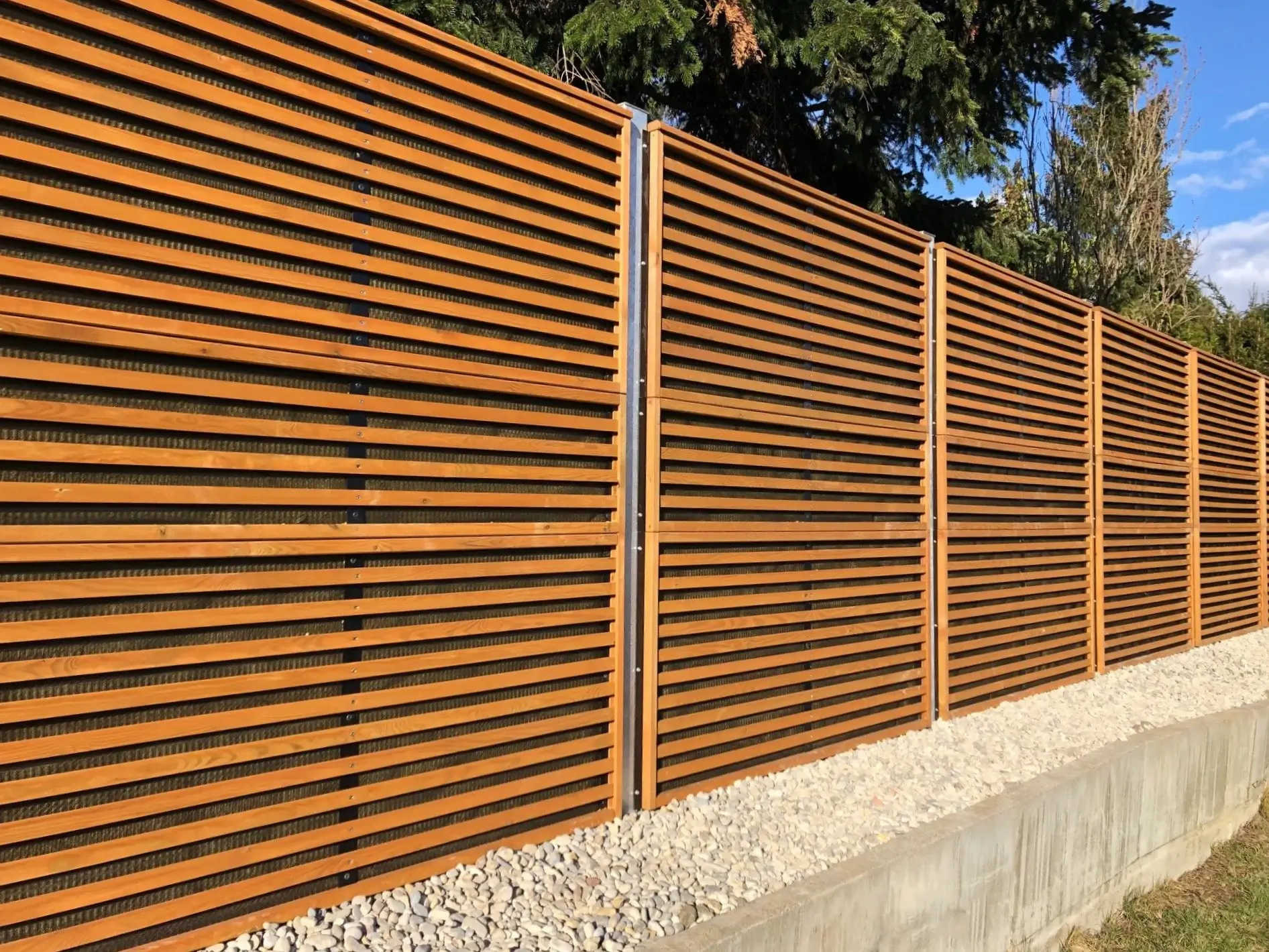
Cutting down noise and getting more privacy – that’s the goal for a lot of Perth homeowners choosing a fence. You’re after that sweet spot where your backyard feels like a quiet hideaway, not a front-row seat to every lawnmower and passing truck.
In this guide, I’ll walk you through what makes an acoustic fence different from an everyday backyard fence, what drives the cost, and who should consider which. You’ll get plain-English tips on noise, privacy and the rules to check in WA. By the end, you’ll have a clearer idea of whether you need a purpose-built noise barrier or whether a standard privacy fence will do the job.
When most folks say “fence,” they picture a standard backyard barrier – timber palings, steel sheet panels, or vinyl. These privacy fences are built to block views into your yard, and a solid one can take some of the edge off nearby noise.
How much it helps depends on the fence’s height, how solid and heavy it is, whether there are gaps, and where the noise is coming from. You may notice everyday sounds (chatty neighbours, barking dogs, lawnmowers) are softened, but a standard fence usually won’t stop the low rumble of a busy road.
Ordinary fences come in all styles: warm timber, sleek coloured steel, or easy-care PVC. They’re generally lighter and less expensive than purpose-built acoustic systems, and some homeowners install simpler styles themselves.
Of course, not all normal fences are equal. Chain-link, picket and gapped slat designs let sound pass straight through the openings – they’re chosen for looks, privacy or airflow, not noise control. Even a solid timber paling fence mainly softens higher-pitched sounds rather than the deep bass of trucks or loud music.
Height is limited too. In WA, fence height limits are generally set by your local council and planning rules, so there is a practical ceiling on how tall an ordinary fence can be without approval. Check with your council before you plan a taller fence.
Why Choose an Acoustic Fence?
Now imagine taking a solid fence and designing it specifically to reduce noise. That’s an acoustic fence – a barrier engineered for sound control rather than just privacy.
Acoustic systems may use dense or multi-layer panels, thick lapped boards, masonry or precast concrete. A key principle is mass: a heavier, continuous barrier blocks more sound than a light one, and gaps let sound leak through.
How much quieter your yard becomes depends on the whole system and the site – the barrier’s height and mass, how well it’s sealed, the distance between the noise source, the fence and where you’re listening, and the type of noise. Suppliers should be able to explain the tested performance of their system; for a serious noise problem, an acoustic consultant can assess your site.
Building one of these is usually not a weekend DIY project. The panels can be heavy, and installation demands careful sealing (even small gaps can let sound leak through). Most acoustic fences are installed by specialists with the right equipment.
In Perth’s sunny, and in places salty, conditions, ask about the materials, coatings and warranty that apply to the specific system. Height is still governed by local council and planning rules, so a taller acoustic wall may need approval. Visually, acoustic fences tend to look like solid walls, though some systems offer textured or coloured finishes.
Acoustic fences are the heavy artillery for noise. They generally cost more than a standard fence, but if your home backs onto a freeway, rail line or busy industrial area, they may be one of the few options that makes a noticeable difference outdoors.
Side-by-Side Comparison
Here’s how a normal privacy fence and an acoustic fence generally compare. Exact performance and pricing depend on the product and your site:
| Aspect | Normal “Privacy” Fence | Acoustic Fence |
|---|---|---|
| Materials | Timber palings, steel sheet panels, vinyl or aluminium slats. Usually relatively light. | Dense or multi-layer panels, thick lapped boards, masonry or precast concrete. |
| Noise reduction | Limited. A solid fence can soften some everyday sounds; gapped designs do little. | Designed for noise reduction. Results depend on the system, height, sealing and site layout. |
| Height (Perth) | Set by local council and planning rules – check before you build. | Same rules apply; taller barriers may need council approval. |
| Cost | Generally lower. | Generally higher, due to heavier materials, sealing and specialist installation. |
| Installation | Many styles are straightforward for local installers. | Usually a specialist job; heavy panels may need lifting equipment and exacting fit. |
| Privacy | Good visual privacy with solid panels; gapped designs trade some privacy for airflow. | Excellent visual privacy (solid wall). |
| Appearance | Wide variety: timber warmth, coloured steel, slats. | Wall-like look; fewer styles, though some finishes are available. |
| Maintenance | Varies: timber may need staining or repairs; metal may need touch-ups if scratched. | Varies by material; masonry and coated metal systems are generally low-maintenance. |
| Best use | Typical suburban yards with moderate noise (neighbours, lawnmowers). | Significant, ongoing noise (busy roads, rail lines, industrial or entertainment areas). |
Cost and Budgets
A basic privacy fence will generally cost less per metre than an acoustic fence. Prices vary widely, so get itemised written quotes for your actual fence line rather than relying on online averages.
Acoustic fencing costs more because it uses heavier materials, more detailed sealing and specialist installation. The main cost factors include:
- the system type and materials
- fence height and length
- footings, ground conditions and slope
- site access and any removal of the old fence
- approvals, if your council requires them
If your budget is tight and the noise is only moderate, a solid, well-built privacy fence might be enough. For serious, ongoing noise, many homeowners decide the extra spend is worth it – but get site-specific advice and quotes first.
Privacy and Aesthetics
All solid fences give you private, eyes-only access to your yard. A normal timber or coloured steel fence suits most Aussie backyards and blends with greenery, and there’s usually a good choice of colours and finishes.
Acoustic fences, by comparison, can look more like mini fortresses: thick panels or concrete with few gaps. They’re not mainly about kerb appeal, though some systems offer textured, timber-look or coloured finishes.
Think of it like curtains. A chain-link or gapped slat fence is like curtains with holes – you can see (and hear) through it. A solid privacy fence is like heavy drapes – you’re visually screened and some sound is muffled. A well-designed acoustic fence is more like blockout curtains for sound.
One trick for normal fences: layer on greenery. Vines, hedges or screening plants help with privacy and soften the look, but they do little to reduce noise on their own. Think of greenery as a finishing touch, not a noise barrier.
Noise Reduction Explained
Noise reduction is measured in decibels (dB). As a general rule of thumb, a 10 dB reduction sounds roughly half as loud to most people, so even a modest measured reduction can be noticeable. What a particular fence achieves in your yard depends on the system and the site, so treat any single figure with caution.
How do acoustic fences work? Three big factors: height, mass and sealing. A barrier works best when it blocks the line of sight between you and the noise source – if you can see the source over or through the fence, sound can reach you too. Taller barriers block more, but height is limited by council and planning rules.
More mass means more sound is blocked or reflected, which is why acoustic panels are much heavier than a typical fence sheet. And every crack or gap is a sound leak, so acoustic installations carefully seal posts, overlaps and the bottom edge.
A quick analogy: think of sound a bit like light. If you can see the street through a fence, sound will find that path too. Practical tip: don’t overlook the bottom edge – a gap under the fence can let noise through.
Perth Considerations: Weather & Rules
Perth’s intense sun, salty breezes near the coast and, in some areas, bushfire risk can all affect fence choice. Steel and aluminium fencing with suitable coatings is widely used in WA, and some acoustic systems use coated steel, masonry or concrete. Untreated timber needs more care to resist weathering, rot and termites. Ask suppliers which products and warranties suit your location – and if you’re in a bushfire-prone area, check what applies to your property.
On the legal front, know the rules before you build. The WA Government’s dividing fences guide explains that fence height restrictions are set by local councils in most instances, and that the standard for a “sufficient” dividing fence can come from local laws or agreement between neighbours. Front (street-facing) fences are generally covered by separate council and planning rules. If you want to go higher – and an acoustic fence often does – check with your council first.
If the fence is on a shared boundary, talk to your neighbour early and put any agreement in writing. My advice: sort out approvals and agreements before work starts. It’s no fun installing a fence and then being told it doesn’t comply.
One more Perth tip: consider the view. An acoustic fence blocks sight lines as well as sound. If you love your sunrise or skyline view, you might not want a tall solid wall on that side. You can also landscape in front of it with vines or shrubs to soften the look (just don’t expect those plants to replace the sound barrier).
Installation & Maintenance
Installing a standard fence is usually relatively quick. An acoustic fence is more involved.
Posts may need substantial footings, panels may need lifting equipment or extra hands, and every joint has to be right. Expect an acoustic install to take longer than a standard fence of the same length – your installer can give you a realistic timeframe.
Maintenance depends on the material. Masonry and coated metal systems are generally low-maintenance – an occasional wash and touching up any scratches. Timber elements need more regular checks.
A regular timber fence might need periodic check-ups: tightening fixings, replacing warped boards and re-staining every few years. If you’re after low fuss, metal or masonry options generally need less upkeep.
Making the Right Choice
So – is an acoustic fence right for you, or should you stick with a regular one? It comes down to how bad the noise is versus your budget. If you’ve got mild neighbour chatter or occasional street noise, a solid, well-built privacy fence may be enough. If your backyard is dominated by freeway, rail, nightclub or industrial noise, you may need a purpose-built acoustic barrier.
On the other hand, don’t overspend if the noise is only a minor annoyance. Sometimes a solid fence plus softer background sound (like a water feature) is plenty.
Last word of advice: get site-specific advice. For a serious noise problem, speak with an acoustic consultant or a specialist acoustic fencing supplier who can assess your site and explain how their system performs.
If privacy, rather than noise blocking, is your main goal, ALISLAT Fencing and Gates designs and installs custom aluminium slat fencing, screening and gates across Perth. Learn more about custom fence installation or reach out to talk through your options.
FAQs
Q: What exactly is an acoustic fence?
A: It’s a fence designed to reduce noise, not just block views. Acoustic fences typically use dense or multi-layer panels, thick lapped boards, masonry or concrete, and are sealed to limit gaps. How much quieter your yard becomes depends on the system, its height, how it’s installed and your site.
Q: Do I need special permission to build one in Perth?
A: Check with your local council first. In WA, fence height limits are generally set by local councils and planning rules, and a taller or front-boundary fence may need approval. If it’s on a shared boundary, agree the plans with your neighbour and read the WA Government’s dividing fences guide.
Q: Can I install an acoustic fence myself?
A: It’s generally a tough DIY job. Acoustic panels can be heavy and need precise fitting – even small gaps reduce performance – and you may need specialist fixings, seals and lifting equipment. Unless you have fencing experience and the right tools, a specialist installer is usually the safer choice. Ask what warranty applies to the materials and workmanship.
Q: Will a regular fence ever be as effective?
A: A solid standard fence gives good privacy and can soften some noise, but it generally won’t match a purpose-built acoustic barrier. Adding mass or extra layers can help, but at that point you’re effectively building an acoustic fence. If noise is a serious issue, get site-specific advice.