Imagine kicking back on your Perth deck, sun blazing, neighbours’ cats prowling – and suddenly you feel watched. That’s the cue for decorative screens on fences. A decorative fence screen is like the sunglasses for your backyard: it blocks prying eyes while adding instant cool to your home.
Instead of a dull wall, picture a patterned metal panel or neat timber slats your fence becomes a design statement and a privacy shield. In Perth’s breezy, sun-drenched suburbs, this double-duty fence is a total game-changer.
Decorative screens on fences don’t just block views – they turn your boundary into art. As one expert puts it, a good fence “protect[s] privacy, add[s] security, and boost[s] the value of your property”. In other words, the right decorative screen lets you enjoy your outdoor space without feeling on display, creating a secluded outdoor room that still looks amazing.
Perth’s home styles (think modern coastal, Hamptons, or industrial) love these fences – a textured or laser-cut panel can complement your house and even echo landscaping themes.
Why Choose Decorative Screens for Your Fence?
Decorative screens on fences mix function with flair. You get a solid boundary and a stylish feature. Common options include:
Laser-cut metal panels: Powder-coated steel or aluminium sheets punched with patterns (leaves, geometric shapes or waves) that cast cool shadows.
Wood slat screens: Horizontal or vertical timber battens (often off eucalypt or jarrah) arranged in gaps. They let light and breeze through narrow slits.
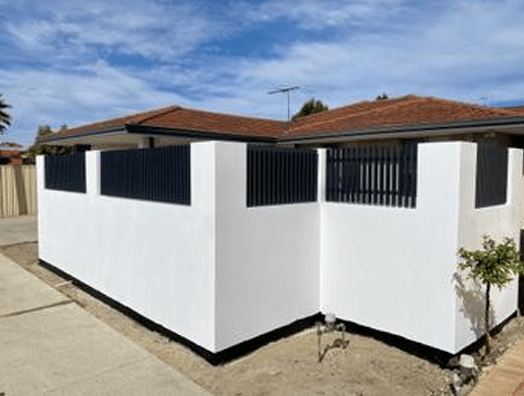
Mixed-material fences: A sturdy base of brick or stone topped with wood or metal slats. This combo adds texture and matches your home’s vibe.
Green (living) fences: Built-in trellises or planter boxes where vines climb up. These living screens add greenery plus privacy.
Each style has its personality. For instance, a concrete fence with a bamboo trellis brings zen-coastal vibes, whereas a sleek dark-metal panel feels ultra-modern. The key is choosing one that suits your home and privacy needs. Designers often say, Don’t overdo it. Keep patterns balanced so airflow isn’t sacrificed – a rule of thumb is 10–20mm gaps on slats or a mix of solid and open sections.
According to Perth fencing guides, decorative privacy fences “combine security with visual appeal”. In practice, this means you get a secluded yard and a visually striking fence. Add a touch of outdoor lighting or climbers on the panels, and suddenly your fence is a garden feature. The right design can make your BBQ corner feel curated, not exposed.
Popular Materials & Designs
Your choice of material affects both look and upkeep. Here’s a quick rundown of common fence-panel materials and their traits (source: local fencing experts):
| Material | Lifespan (Years) | Maintenance | Style & Notes |
| Timber (hardwood) | ~10–50 (hardwoods) | High – reseal/oil every 2–5 yrs; check for rot or termites | Warm, natural look. Rustic or contemporary. (Terracotta stain or grey-wash are trendy.) |
| Colorbond steel | ~15–25 (longer inland) | Low – wash off salt spray, touch up chips | Sleek, modern boundary. Bug and fire-resistant. Comes in many colours (but solid panels block light unless slatted). |
| Aluminium | ~20–30+ (non-corrosive) | Very low – occasional wash | Lightweight and rust-proof (ideal for Perth coast). Often powder-coated. Great for crisp, high-end screens. |
| Composite/PVC | ~20–30+ (some with 30yr warranty) | Very low – just wash | Weather-resistant, termite-proof. Offers wood-look finishes in trendy greys or white. Less fire-safe, so no go in bushfire zones. |
| Brick/Stone | 50+ | Low – mostly cleaning/joint repair | Ultra-durable and noise-blocking. Timeless aesthetic (think rendered stucco or feature bricks). Expensive and heavy; often requires council approval over certain heights. |
A couple of notes: Timber slats give warmth but Perth’s harsh sun means they fade and warp unless you keep them well-sealed. Meanwhile, aluminium panels don’t rust and stand up to salt air – they’re practically maintenance-free.
Colorbond (a zincalume steel) is fire- and termite-proof, good for bushfire zones, and often lasts 20+ years with minimal care. But solid Colourbond can feel heavy, so many opt for decorative slatted Colorbond sections for airflow and style.
If you’re in a coastal suburb, aluminium or powder-coated steel is a safe bet (they won’t corrode from sea breeze). In bushier areas (Kalamunda, Roleystone), you might need non-combustible materials (steel, stone) per WA fire rules.
And wherever you are, mixing materials is very in. A short render wall with tall dark timber slats on top? Instant modern vibe. Classic wrought-iron can even be privacy-enhanced by backing it with laser-cut panels or wooden battens.
Privacy, Comfort and Local Flair
Why bother with decorative fence screens at all? In Perth, outdoor living is everything. But our beautiful skies come with drawbacks: intense sun, salty wind and sometimes noisy streets. A well-designed fence screens you from the world while letting the good bits in.
For example, a solid slatted panel can block afternoon glare while still allowing the cooling Fremantle Doctor to flow through. According to local guides, even a high fence can “dampen street noise a bit” and protect kids or pets from darting into traffic.
Privacy fences simply stop your next-door neighbours – and their pets – from getting a free show. They also give you defined “rooms” outside: a fence around the pool area, or a screen beside the outdoor dining spot, makes each zone feel intentionally cosy rather than just leftover yard.
In short, decorative screens on fences let you claim your slice of the outdoors. As one landscaping specialist said, a strong attractive fence “defines your space, adding comfort and value to your home”.
And let’s not forget style points. Your fence is often the first thing people see. A plain colorbond wall might feel underdressed on a chic new townhouse. But a decorative fence turns the eyesore into eye-candy. Consider it the front-door accessory or facade-layer for your house.
You can match colours (e.g. matching a Charcoal screen to a Charcoal roof) or contrast (light grey with dark wood, say). Even adding vines or uplights can make the fence blend into the garden ambiance.
Perth Regulations & Practical Tips
In WA, fences aren’t totally free-for-all. The WA Residential Design Codes generally allow side and rear boundary fences up to 1.8m high without a permit. Front fences are trickier: usually a solid front fence can only be about 1.2m tall. Above that (up to ~1.8m) it usually must have at least half its area open (slats or gaps) to keep sightlines.
In practice, many Perth councils let you build to 1.8m out front if the upper half is open lattice or slats. Some hilly or heritage areas may have extra rules, so always check with your local council.
Be wary of fully brick or glass walls: councils often ask for permits over about 0.75–1.2m height. And remember pool safety laws: if your fence is also a pool barrier, it must meet Australian Standard rules (like self-closing gates, 1.2m height, no footholds).
For example, City of Melville notes that visually permeable panels must have gaps ≥50mm occupying at least a third of the panel area if higher than 1.2m. In short, decorative fence screens can still comply, but plan the open/solid balance carefully.
Installation and Build
A fabulous design means nothing if it’s wonky. Hire a pro installer if you can. A Perth fence specialist reminds us that even the coolest custom screens “look bad if it’s lopsided”. Make sure panels are level and posts are straight.
Fixings should be tightened properly – as one fence pro quips, loose screws can “snowball into big repairs” later. In other words, invest in precision during installation: the result is worth it (and so is avoiding a “squinting, swearing redo” down the road).
Keep an eye on spacing if using slats. If gaps are too wide, privacy is lost; too narrow, and airflow suffers. A common sweet spot is around 10–20 mm between horizontal slats, or mixing solid panels with decorative sections.
When adding screens to gates or divides, ensure the frame is strong enough – metal panels can catch wind like sails if overly large. Many locals combine heavy lower gates with decorative upper panels for both strength and style.
Costs & Maintenance
Let’s talk turkey: decorative screens can cost more than a plain fence. Custom metal panels and exotic timbers add up. As a guide, a basic colorbond slat fence might run a few hundred dollars per metre, whereas a custom laser-cut aluminium panel can be around $800 or more each.
Labor is pricier too; intricate panels take longer to fit. In fact, many Perth renovators say a fancily decorated fence can run about double the price of a plain one. To budget smart, choose quality where it matters. For example, hardwood slats look great but need sealing. Cheap timber might save cash now, but expect annual re-oiling if you want it to last.
On the flip side, materials like aluminium, Colorbond and composite cost more upfront but last longer with almost no care. As one maintenance tip notes: even Colorbond will attract salt, and timber will grey under the sun. But metal fencing? Just hose it down now and then and it’ll look new.
Aluminium/Colorbond: Expect roughly $95–$155 per square metre for powder-coated fence panels. Fence installers often charge $65–$110 per linear metre for labour. For a full fence, costs might be $2,000–$5,500 overall depending on size and premium features.
Timber: Depending on species, about $150–$300 per linear metre. Budget extra for sealing every 1–3 years.
Composite panels: $100–$200/m² installed. Very low upkeep but check it’s fire-rated if you’re on a bushfire fringe.
A custom privacy screen panel (say 1m×2m) could be $400–$1,000 alone, plus posts and installation. Get a few quotes and weigh up how long you’ll live with it: a well-made fence is as permanent as a new deck or extension.
On upkeep: even the best fences get a little attention. In Perth’s climate, metal screens truly are low-key – just a quarterly hose to remove salt will do. Composites and Colorbond similarly need only an occasional rinse. Timber fences, however, should be oiled or stained about once a year, and screws tightened after storms. Regular checks (and early repair of any rot spot) will keep things looking sharp.
Conclusion
Decorative screens on fences let you have privacy with pizzazz. They hide your yard but define it too, making outdoors feel like a living extension of your home. The right design suits your house’s style, stands up to Perth’s sun, and matches how much fuss you want to do each year. Whether you lean into a dark grey steel screen, warm timber slats, or a vine-covered trellis, Perth has the options to fit.
Investing in quality materials and a skilled install really pays off. A crisp, well-built decorative fence doesn’t just screen you from view – it elevates your home’s look, boosts kerb appeal and makes you love your yard every day. Picture stepping out and feeling that comfy, private vibe instead of one-eyed paranoia. That’s the power of a great fence.
Ready to upgrade your outdoor space? Talk to a Perth fencing specialist about decorative privacy screens. Whether it’s a factory-direct aluminium panel from Phoenix Decorative Metals or a custom timber slat wall from your favourite local installer, the right screen can transform your yard. Start designing today for that “ahh” factor every time you step outside.
FAQs
What are decorative screens on a fence?
They are panels or inserts (often metal or wood) with artistic cutouts or slats added to a fence. These screens block views and let light through in patterns, giving privacy with a stylish flair.
How do fence screens improve privacy?
By creating a solid or semi-solid barrier, decorative screens hide your yard from onlookers. Tight slats or cutouts block lines-of-sight (and noise), so you get a secluded outdoor area. At the same time, good designs can let air/light in, unlike a plain wall.
Are decorative fence screens suitable for Perth weather?
Absolutely. Powder-coated steel and aluminium screens resist Perth’s sun and salt air without rusting. Composite boards and high-quality hardwoods can work too (just choose fire-rated options in bushfire zones). These materials won’t warp or need repainting every season.
Do I need council approval for a decorative fence in Perth?
In most cases, no for a side/rear fence up to about 1.8 m. Front fences over ~1.2 m solid usually require consent, or else must be partly open (lattice/slats). Brick or masonry sections often need permits over 0.75–1.2 m. Always check your local council’s fence rules first.
How much do decorative fence screens cost in Perth?
It varies a lot. Simple slatted panels might be a few hundred dollars per linear metre, but a custom laser-cut screen can be ~$800+ each. Overall, decorative fences often cost around twice as much as a plain fence because of custom materials and extra labour. Budget accordingly and get quotes from fencing pros.