
Street appeal in Perth works differently. Bright sun, coastal air, sharp shadows at sunset, every detail shows. A plain driveway can look flat and forgettable. But strong custom gate entrances? They shift the mood instantly. The property feels complete. Secure. Intentional.
Across suburbs from the leafy streets of Subiaco to the coastal blocks near Cottesloe, the demand for custom gate entrances keeps rising. Young professionals, investors, and renovators all want that polished first impression without overcomplicating the build.
A well-designed gate does more than block a driveway. It frames architecture, adds privacy, improves security, and quietly lifts property value. It also says something about style. Minimal? Industrial? Coastal luxe? That choice matters.
This guide explores design ideas, materials, pricing, automation, council considerations, and long-term benefits. Everything is laid out clearly. No fluff. No hard sell. This article provides a comprehensive understanding of custom gate entrances in Perth.
How street presence and perceived security quietly affect resale value
Although buyers rarely admit that a gate influenced their decision, open homes reveal a different story. A controlled entrance shifts how people move through a property. They slow down. They look longer. The home feels contained and defined. That psychological shift influences value in subtle ways that rarely show up in spreadsheets.
One job in Yokine stands out. The owners hesitated on installing custom gate entrances during renovation because funds were tight after landscaping blew out. The gate went in anyway, mostly to satisfy security concerns. At sale time, two competing offers mentioned the gated frontage as a reason they felt comfortable bidding higher. The lift wasn’t massive, but it offset the cost almost exactly.
That said, overcapitalizing is a real risk. Spending twenty-five thousand dollars on an elaborate steel feature gate in a street of modest homes usually loses money. Street context matters. A gate should elevate a property, not make it look like it belongs somewhere else entirely.
Are Custom Gate Entrances Worth the Investment?
For many Perth homeowners, the answer is yes.
When comparing costs versus benefits:
- Improved safety
- Added property value
- Daily convenience
- Enhanced design appeal
Design decisions that look impressive but age poorly over time
Trends move quickly. Laser-cut panels with intricate patterns had a strong run a few years back. They photographed beautifully. Then dust accumulation and weather exposure turned those delicate cut-outs into maintenance traps. Clients began calling about rust spots where moisture lingered.
Large solid panels also gained popularity for privacy. They block sightlines effectively, but they also increase wind load significantly. In coastal Perth suburbs, strong gusts push against those surfaces relentlessly. Undersized posts begin to flex. Hinges strain. Motors work harder than designed. Five years later, alignment issues creep in.
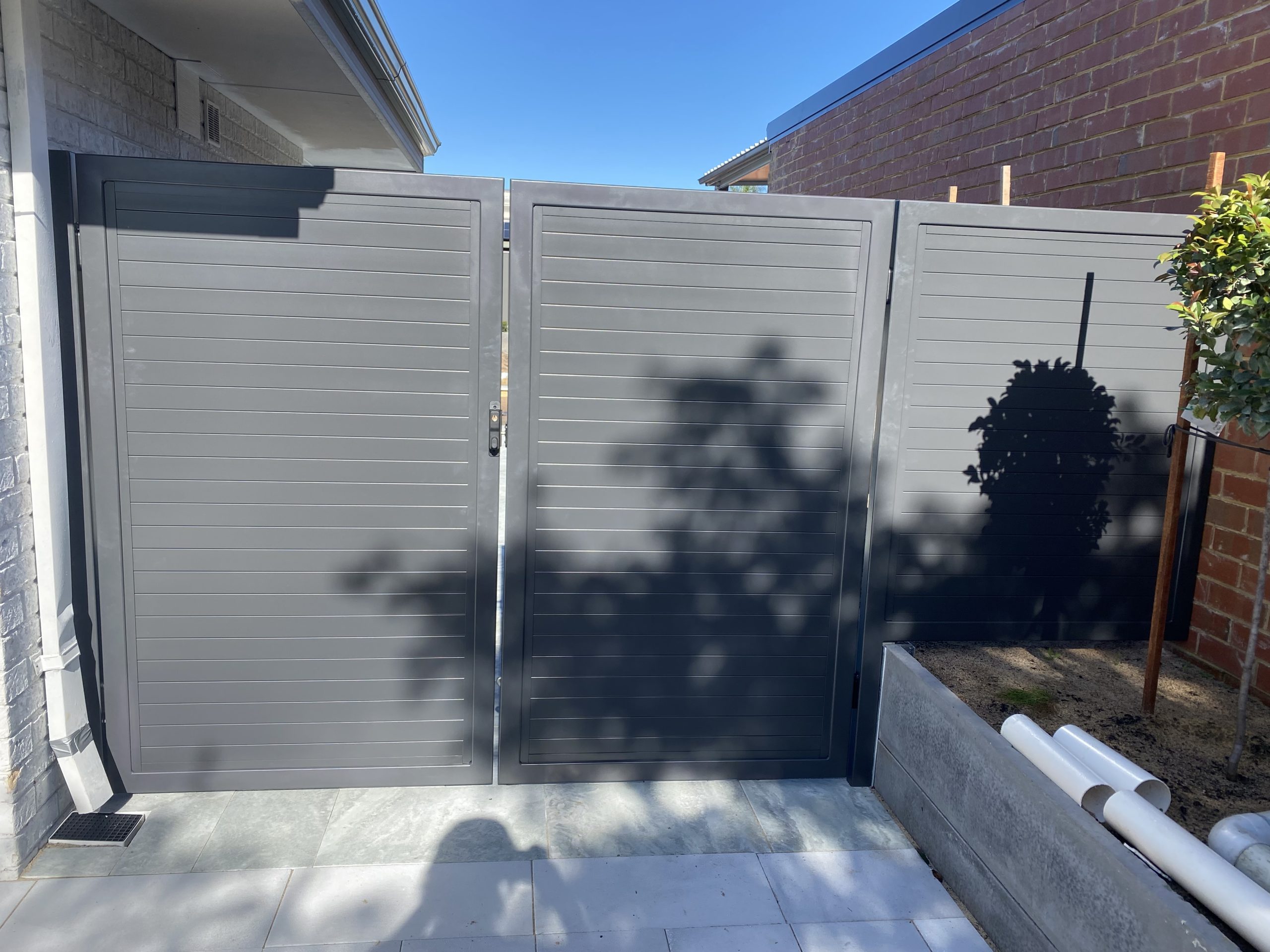
Custom gate entrances should balance design ambition with structural practicality. Subtle horizontal slats often outperform dramatic panels long-term. Not only do they appear safer, but they also effectively distribute the load and require less maintenance. Good design doesn’t just impress on handover day; it survives a decade of sun and wind.
The Custom Gate Entrances in Perth are a budgeting trap most homeowners fall into
Budget discussions often address only part of the scope early on. Clients see a fabricated figure and assume that’s the project total. They don’t factor in trenching for power, compliance inspections, or the cost of modifying existing fencing to align cleanly with the new structure.
One recent project in Morley hit trouble when the driveway was already poured. No conduit had been laid beneath for automation wiring. Retrofitting required saw-cutting concrete, trenching, and then patching. The patch never perfectly matched the original finish. The added cost exceeded three thousand dollars, avoidable with early coordination.
On the money side, custom gate entrances usually get pushed to the final stage of a build, just as budgets are drying up. Since lenders mostly release payments for structural milestones, gates fall outside that window—meaning owners pay out of pocket while waiting for a valuation bump. That gap creates real stress, especially for owner-builders already juggling a stack of invoices.
How Much Do Custom Gate Entrances Cost in Perth?
Costs vary depending on size, materials, automation, and site conditions.
Here is a general guide:
| Type of Gate | Estimated Cost Range (AUD) |
| Basic Manual Aluminium | $2,500–$4,000 |
| Timber Custom Design | $4,000–$8,000 |
| Steel Laser-Cut | $6,000–$12,000 |
| Fully Automated Premium | $10,000–$20,000+ |
Material choices shaped by Perth’s climate rather than showroom appeal
Aluminum dominates coastal installs for good reason. It resists corrosion and remains relatively lightweight. Powder-coating technology has improved, offering durable finishes that withstand UV exposure better than older systems. That’s not marketing talk; it’s observable on properties installed ten years ago.
Steel delivers strength and visual weight, but only when properly galvanized. Skipping that step to reduce cost is short-sighted. Rust starts invisibly in joints and spreads. Repairing corroded frames often costs more than replacing them entirely. Shortcuts here rarely age gracefully.
Timber sits in a different category. It brings warmth and texture that metal can’t replicate. Yet Perth’s heat dries untreated wood quickly. Owners who love natural grain must commit to sealing cycles. Otherwise, fading and cracking follow. Custom gate entrances made from timber demand relationship-level maintenance, not casual neglect.
Automation systems and the quiet cost of choosing cheap motors
Automation is where optimism often collides with reality. Imported motor kits flood the market at attractive prices. They look similar to reputable brands, and sales reps promise comparable performance. The difference reveals itself over time.
A client in Canning Vale opted for a lower-cost motor to save roughly fifteen hundred dollars. Within two summers, the control board failed. Replacement parts were unavailable locally. The entire system required replacement. The net expense doubled what a quality motor would have cost initially.
Custom gate entrances that rely on automation should treat the motor as core infrastructure, not an accessory. Heat, dust, and repeated cycles stress components constantly. A reliable motor with local servicing support often determines whether the system feels seamless or frustrating.
Sloped blocks, drainage issues, and installation complexity people underestimate
Perth isn’t uniformly flat. Sloping driveways introduce mechanical challenges. Swing gates need a sufficient clearance arc. Sliding systems require perfectly level tracks. Even minor misalignment accelerates wear.
Drainage complicates matters further. Tracks positioned without consideration of water flow become collection points during heavy rain. Debris builds up. Rollers grind. Corrosion accelerates. Fixing drainage after installation costs far more than grading correctly beforehand.
Custom gate entrances on sloped blocks demand careful planning. Concrete footings must account for movement. Reinforcement becomes critical. These aren’t glamorous considerations, but ignoring them shortens lifespan dramatically.
Council approvals, compliance checks, and the paperwork nobody budgets time for
Local councils across Perth vary in their setback and height regulations. Some require approvals for gates exceeding certain heights. Others focus on boundary alignment. Clients frequently assume installers handle everything automatically.
Electrical compliance adds another layer. Automated systems require licensed electricians and safety beam integration. Skipping these may seem minor until insurance claims surface after accidents. Liability quickly outweighs upfront savings.
Setting up custom gate entrances without checking council rules is a massive risk that leads to stop-work notices or expensive changes. Council paperwork almost never moves as fast as a homeowner wants, so building those approval windows into your schedule is the only way to avoid making rushed, bad compromises later.
Investor decisions versus owner-occupier expectations and long-term value
Investors usually care more about the bottom line than long-term looks, often sticking with basic manual systems to protect their yield. On the other hand, owner-occupiers almost always go for automation and integrated features because they actually have to deal with the convenience or lack of it every single day.
Neither approach is inherently wrong. The tension appears when investors overbuild for rental properties, assuming higher rent will offset the expense. In many Perth suburbs, rental premiums don’t justify elaborate entries. Maintenance risk also increases under tenant use.
Custom gate entrances serve different purposes depending on ownership intent. Understanding that context prevents mismatched spending. Practicality should guide investor decisions, while personal preference shapes owner-built.
Maintenance patterns observed after years of follow-up service visits
Five years after installation, most quality systems perform smoothly if serviced. Ten years introduces predictable wear points. Rollers degrade. Powder-coating chips near contact areas. Motors require recalibration.
Neglect magnifies minor issues. A small grinding noise may signal track debris. Left unattended, it damages the gearbox. Replacement becomes unavoidable. Servicing once annually costs far less than motor replacement.
Custom gate entrances operate as mechanical systems exposed to the elements daily. Treating them like decorative fixtures shortens their lifespan. Clients who schedule preventative maintenance consistently report fewer surprises.
Balancing design ambition with structural reality and neighbourhood context
Ambitious designs often emerge during concept discussions. Wide spans without center supports often characterize the designs. Hidden hinges. Flush-mounted tracks. These ideas appeal visually but increase engineering demands.
Wide spans require heavier frames and stronger motors, while hidden components complicate servicing, and flush tracks increase water pooling risk. Each design choice carries trade-offs regarding Western Australian building permits and approvals that initial sketches often obscure.
Custom gate entrances really work when your ambition doesn’t outrun the structural limits. Sometimes, a bit of restraint leads to much better long-term results. It’s also worth considering that a massive, over-the-top gate on a quiet, modest block can actually hurt your resale value.
Financial timing, lending friction, and sequencing with other trades
Getting the construction sequence right saves more money than most people realize. Before pouring the driveway, run your conduits to simplify the electrical setup. It’s the same with fencing; syncing up early prevents messy misalignments. If you wait until the landscaping is finished, you’re just making access way harder than it needs to be.
Lending stages typically release funds after structural milestones. Gates sit outside that scope. Clients must manage interim payments. Delays in valuation adjustments can create short-term cash strain.
Custom gate entrances benefit from early integration into building plans. Treating them as an afterthought increases expense and scheduling friction. Proper sequencing saves both time and stress.
Where simplified advice falls short in real-world installations
Common advice suggests aluminum for low maintenance, steel for strength, and timber for warmth. While broadly accurate, it ignores site-specific variables. Wind exposure, soil conditions, and traffic frequency alter outcomes significantly.
One hillside property required additional reinforcement despite aluminum’s lighter weight due to persistent crosswinds. A simple material recommendation would have failed without contextual assessment.
Custom gate entrances deserve site-driven decisions rather than trend-based selection. Blanket advice rarely survives field conditions. Nuance matters more than popularity.
Conclusion
A home entrance sets the tone for everything beyond it. It reflects security, style, and pride of ownership. In Perth’s changing property market, custom gate entrances are no longer just a luxury; they represent smart planning, stronger protection, and long-term value for modern homes.
With aluminum slats, timber finishes, and smart automation available, the right upgrade can completely reshape street appeal. Get a quote today and see how professionally installed custom gate entrances enhance safety and design.
Contact us today to speak with a trusted Perth gate specialist and take the first step toward a sharper, more secure entrance.
FAQs
-
How much do custom gate entrances cost in Perth?
In Perth, custom gate entrances typically set you back anywhere from $2,500 to $20,000, depending on the gear and design. Aluminum is usually the budget-friendly route, whereas automated steel or timber will push those costs up. Don't forget that site prep and electrical runs can also add to the final bill.
-
Are automated custom gate entrances reliable?
Yes, modern automated custom gate entrances are highly reliable when installed professionally. Quality motors, safety sensors, and regular servicing ensure smooth performance. Smart systems also allow remote access and monitoring for added convenience.
-
Which material is best for custom gate entrances in coastal Perth?
Your best options near the coast are powder-coated aluminum and galvanized steel due to their non-corrosive nature. Treated hardwood is a solid choice, too, but you’ve got to keep it sealed. Picking the right material for the local weather is the only way to make sure it actually lasts.